
Federal Judge Orders Review of DOJ Conduct in Dispute Over DC Golf Course
Qwenews.com – A federal judge has launched a formal inquiry into whether Justice Department lawyers and other Trump administration officials gave the court misleading information about President Donald Trump’s proposed overhaul of East Potomac Golf Course in Washington, DC.
US District Judge Ana C. Reyes announced the investigation Friday after a contentious hearing that stretched for nearly three hours. The proceeding focused not only on the planned work at the public golf course, but also on whether the administration accurately described its intentions while preservation advocates and golfers sought to stop major changes to the site.
Reyes questioned Associate Attorney General Stanley Woodward closely about the government’s handling of the dispute. Her concerns included a late notice issued before hundreds of trees were cut down and prior assertions that no formal renovation plan existed, despite Trump’s repeated public statements that the project would move forward.
“Let’s not play games anymore, Mr. Woodward,” Reyes told him.
Questions About Tree Removal and Renovation Plans
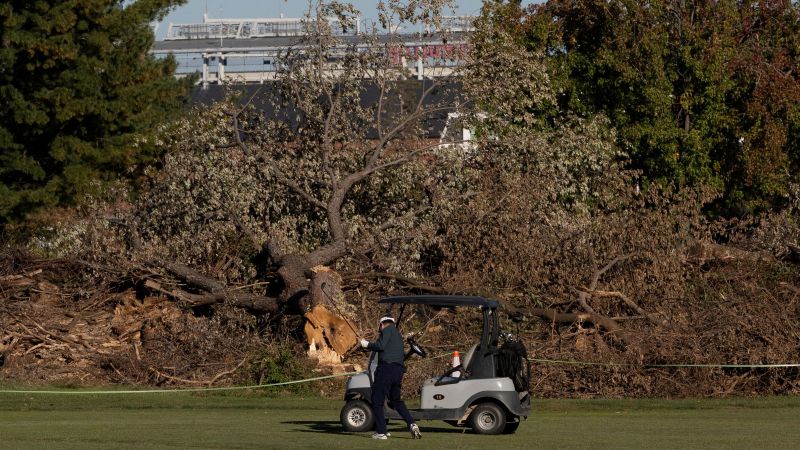
The court’s scrutiny follows the October 10 removal of more than 400 trees at East Potomac Golf Course. The administration had maintained that the tree-cutting was separate from Trump’s broader vision for the course. Reyes has expressed doubt about that distinction, particularly because the proposed redesigned course would contain substantially fewer trees.
During Friday’s hearing, Woodward appeared to indicate that the tree removal was connected to a wider effort to modernize the golf facility. That position differed from the government’s earlier representation. As Woodward attempted to clarify his comments, Reyes repeatedly turned to the hearing transcript and read back statements he had made moments before.
“Are you kidding me right now?” Reyes said.
There was audible reaction from people in the courtroom as the exchange grew more heated. The judge challenged Woodward’s explanations and pressed him on whether the administration had attempted to avoid meaningful judicial review by characterizing the work too narrowly.
Woodward told the court that he had tried to respond truthfully and effectively to its questions. He also argued that some of Reyes’ inquiries did not bear directly on the legal issues in the case. The judge cut him off after that response.
“Are you done?” Reyes asked. “Can you answer my question now?”
Potential Consequences for Government Lawyers
At the outset of the hearing, Reyes read from the professional rules governing attorneys who practice in Washington, DC, emphasizing provisions addressing factual statements made to a court. The move suggested that possible professional sanctions were central to the judge’s concern.
Reyes stressed that she had not concluded that Justice Department attorneys had misrepresented the facts. Instead, she said the court would examine whether that had occurred. The investigation is expected to involve a special master appointed by the court, though the exact scope and process have not yet been set out publicly.
If the review finds that lawyers or officials made inaccurate or incomplete representations, the court could consider sanctions. Reyes also directed the attorneys involved to preserve documents connected to the litigation, ensuring that material relevant to the court’s inquiry remains available.
The confrontation places Woodward in a particularly visible role. As associate attorney general, he is the third-highest official at the Justice Department. He is also leading the department’s work involving the midterm elections, including a lawsuit seeking to stop certification in the Alaska Senate contest if the Republican incumbent does not prevail.
A Broader Fight Over the Administration’s Representations
The underlying case centers on Trump’s stated plan to turn East Potomac Golf Course into what he has called a “world class” facility. Preservationists and golfers opposing the project want the course left in its existing form and have challenged actions connected to the proposed redevelopment.
Earlier in the week, Reyes halted additional tree removal in a sharply worded 70-page ruling. She required the Interior Department to give the court advance notice before making further irreversible changes at the property. The administration is appealing that decision.
Trump has publicly declared that work on the project would begin “immediately” and has criticized Reyes, calling her a “crazed lunatic.” Those statements have intensified the tension surrounding a case that now involves both the future of a prominent Washington recreational space and the government’s obligations when appearing before a federal court.
For visitors and residents who use East Potomac Golf Course, the dispute has immediate practical importance. The court’s restrictions are intended to prevent permanent changes while the legal challenge proceeds. For the administration, the case raises a separate question about how policy plans, agency actions, and public statements must be described when litigation is underway.
Reyes’ inquiry does not determine whether Trump may ultimately pursue the golf course renovation. It instead examines whether the administration’s account of the project and its related actions was candid and complete. The answer could shape the next stage of the litigation, including whether the court imposes penalties and how closely it oversees any future work at the site.
Related Reading
Frequently Asked Questions
What is Judge tears into senior DOJ official?
Judge tears into senior DOJ official is the main topic of this guide. The article explains the context, practical details, and next steps readers should understand.
Why does Judge tears into senior DOJ official matter?
Judge tears into senior DOJ official matters because readers are looking for a useful answer, not just a short summary. Good content should match search intent and help them decide what to do next.