
Spain Heads Toward Early Vote as Housing Anger Builds
Qwenews.com – Spain will hold a snap general election on November 29 after Prime Minister Pedro Sánchez moved to seek a renewed mandate amid growing public frustration over the country’s housing crisis.
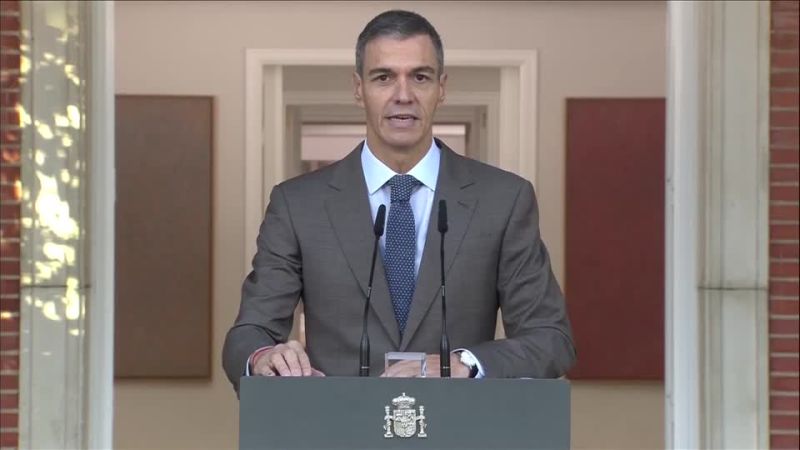
Sánchez announced the early election in a televised address from the Palace of Moncloa, the prime minister’s official residence in Madrid. His decision follows days of visible protests in the capital and demonstrations in other Spanish cities calling for stronger action on housing affordability and access.
The time has come for the Spanish people to decide what future they want for themselves and for their country.
The election call puts the housing emergency at the center of the political debate. For many residents, the issue is not an abstract policy dispute: it concerns whether people can find and keep a home at a cost they can manage. The protests have underscored how sharply housing pressures have risen on the national agenda and how difficult it has become for the government to build consensus around a response.
Housing Measures Failed to Win Parliamentary Support
The announcement came fewer than 72 hours after the government failed to win parliamentary approval for two royal decree laws related to housing. The measures had been intended to respond to mounting pressure over the crisis, but the setback highlighted the limits of Sánchez’s ability to advance his agenda in parliament.
Calling an election allows voters to weigh in directly after that defeat. It also gives Sánchez an opportunity to argue for broader backing for the reforms he says are still needed. At the same time, the move increases political uncertainty at a moment when demonstrators are demanding swift answers rather than a prolonged institutional stalemate.
In his address, Sánchez acknowledged that his administration had fallen short of all its aims.
We have made mistakes and have not managed to do everything we set out to do.
He said Spain still faced deep unfairness and described the election as necessary to rebuild and expand support for changes aimed at reducing inequality.
There are still many injustices to correct.
Sánchez said he needed to renew and broaden public support in order to pursue reforms that would help citizens lower these levels of inequality.
Puerta del Sol Becomes a Focus of Protest
In Madrid, hundreds of people have spent days camped in the central Puerta del Sol, one of the city’s most prominent public gathering places. Their presence has turned a major urban square into a visible symbol of the wider housing dispute.
The demonstrations have not been limited to the capital. Over the past week, protests demanding measures to address what participants describe as a housing emergency have spread to cities across Spain. The expanding protests have increased the pressure on political leaders to show how they would address the concerns being raised.
The immediate political trigger for the election was the parliamentary failure of the two housing-related decrees. But the public demonstrations give the decision a larger context. Housing has become a test of whether national institutions can respond to a problem that is being felt in homes, neighborhoods and city centers across the country.
What the November 29 Vote Will Decide
The November 29 election will give Spanish voters an opportunity to judge both the government’s record and its proposed direction. Sánchez is presenting the vote as a choice about Spain’s future and about the authority required to undertake further reforms.
For the government, the campaign is likely to involve explaining why its existing efforts did not secure sufficient parliamentary support and how a new mandate could change that. For voters concerned about housing, the campaign will bring renewed attention to whether political promises can produce measures capable of easing the pressure that has driven people into the streets.
The result will also determine the political conditions under which any future housing legislation is considered. A government with stronger support could have more room to pursue its priorities, while a fragmented result could leave difficult negotiations and legislative obstacles in place.
Sánchez’s decision acknowledges that the dispute cannot be resolved solely through televised statements or contested parliamentary votes. By bringing forward the election, he has placed the question before the electorate at a time of heightened public anger.
A Campaign Shaped by Inequality
The prime minister framed his decision in terms of inequality as well as housing. That language broadens the stakes of the campaign beyond the two rejected decrees and points to a wider argument over how Spain should respond to social and economic pressures.
His admission of mistakes may be intended to recognize the frustration behind the protests while making the case that further action requires fresh public support. Whether that argument resonates will depend on how voters assess the government’s record and how competing political forces address the demand for housing solutions.
For now, the camp at Puerta del Sol and demonstrations elsewhere have ensured that housing will remain impossible to ignore. Spain’s early election has transformed a parliamentary setback into a nationwide contest over representation, reform and the urgent need for a response to the country’s housing crisis.
Related Reading
Frequently Asked Questions
What is Spain s Sanchez calls snap election?
Spain s Sanchez calls snap election is the main topic of this guide. The article explains the context, practical details, and next steps readers should understand.
Why does Spain s Sanchez calls snap election matter?
Spain s Sanchez calls snap election matters because readers are looking for a useful answer, not just a short summary. Good content should match search intent and help them decide what to do next.