
Federal Judge Says Seattle’s Court-Appointed US Attorney Cannot Be Removed by Trump
Qwenews.com – A federal judge in Washington state has ruled that President Donald Trump may not dismiss a US attorney chosen by a federal court, opening a major new dispute over the limits of presidential authority over federal prosecutors.
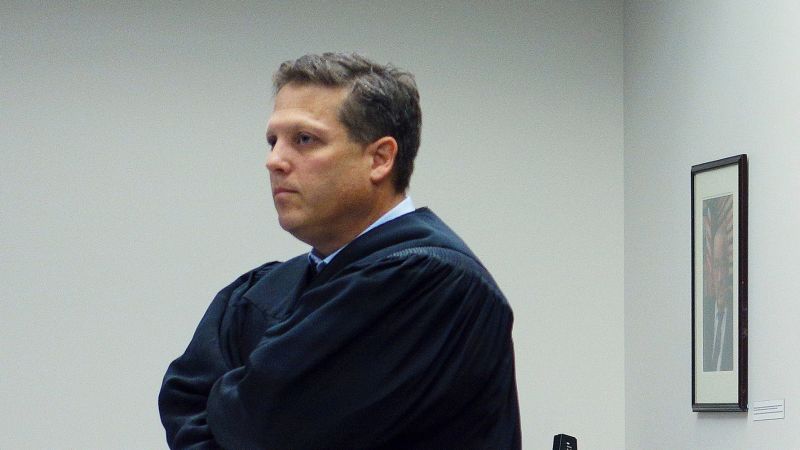
The decision keeps Roger Rogoff in place as US attorney for the Western District of Washington, despite the administration’s effort to remove him shortly after his court appointment in July. Judge Stanley Bastian, chief judge of the US District Court for the Eastern District of Washington, issued a preliminary injunction Thursday after an hourlong hearing.
“Mr. Roger Rogoff is the United States Attorney for the Western District of Washington and has been the rightful holder of that office since July 15, 2026, when he took the oath of office,”
Rogoff was appointed by a federal court to lead the Seattle-based office and was fired only minutes later. His lawsuit is the first challenge by a court-appointed US attorney who was removed by a president, and Bastian said he was addressing the issue for the first time as a judge.
A dispute over temporary appointments
Federal law permits the president to choose an interim US attorney for up to 120 days. If the Senate has not confirmed a presidential nominee when that period ends, the local federal court may select an attorney to serve until a Senate-confirmed replacement takes office.
Courts in several states have been examining efforts by the Trump administration to keep presidentially preferred prosecutors in charge after the temporary 120-day period has expired. The cases have raised questions about whether the executive branch can sidestep the statutory process when a Senate confirmation has not occurred.
Bastian concluded that the president’s removal authority in this setting applies to US attorneys who received Senate confirmation, rather than to prosecutors appointed directly by federal courts under the statute.
“Allowing the president to fire a United States attorney appointed by the court also eliminates the incentive to nominate a candidate that can be confirmed by the Senate,” Bastian said. “In other words, the executive and legislative branches are supposed to and encouraged to work together.”
The ruling does not challenge the Justice Department’s recognition that courts may fill a US attorney vacancy after the 120-day interim period. Instead, the legal divide centers on what happens after that judicial appointment: whether the president can remove the court’s choice and install another preferred official.
What the injunction means for Seattle
While the preliminary injunction remains in force, the administration is barred from removing Rogoff or interfering with his work as the top federal prosecutor for the Western District of Washington. The office serves Seattle and other areas of western Washington and handles federal criminal and civil matters within the district.
A preliminary injunction is not a final resolution of every issue in the lawsuit. It is an order designed to preserve the disputed arrangement while the legal challenge moves forward. In practical terms, Rogoff may continue carrying out the responsibilities of the office during that process.
The Justice Department has said it will appeal Bastian’s decision. That appeal could give higher courts an opportunity to decide whether court-appointed US attorneys occupy a category distinct from officials nominated by a president and confirmed by the Senate.
Similar fights in New Jersey and Nevada
The Seattle case follows months of related litigation involving US attorney positions in other states. In New Jersey, Trump sought to restore Alina Habba, his former personal criminal lawyer, as interim US attorney after a federal court selected another person for the position.
Habba later stepped down after a federal appeals court determined that her appointment was unlawful. The Justice Department subsequently worked with federal judges in New Jersey to identify a prosecutor the court could appoint to the position.
Another dispute involves Sigal Chattah, Trump’s preferred choice to lead the US attorney’s office in Nevada. The Justice Department has asked the Supreme Court to review litigation over its efforts to keep Chattah in that role after lower courts ruled her appointment invalid. The Supreme Court has not indicated whether it will hear the case.
Together, the cases spotlight the constitutional and statutory balance among the White House, the Senate and the federal judiciary. Presidents traditionally nominate US attorneys, while the Senate provides advice and consent before those nominees take office. The court-appointment mechanism functions as a backstop when that process does not produce a confirmed official in time.
Rogoff’s case now places a direct question before the courts: whether that backstop remains meaningful if a president can immediately remove the person selected by a judge. Bastian’s ruling answers that question, at least for now, in favor of the court-appointed prosecutor and against the administration’s asserted removal power.
Related Reading
Frequently Asked Questions
What is Judge blocks Trump from firing Seattle?
Judge blocks Trump from firing Seattle is the main topic of this guide. The article explains the context, practical details, and next steps readers should understand.
Why does Judge blocks Trump from firing Seattle matter?
Judge blocks Trump from firing Seattle matters because readers are looking for a useful answer, not just a short summary. Good content should match search intent and help them decide what to do next.