
Houthi gains deepen pressure on Saudi Arabia and test US strategy
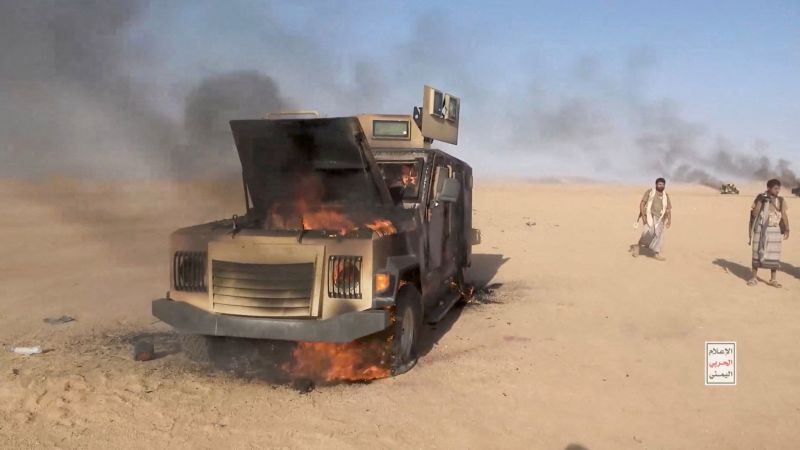
Qwenews.com – Iran-backed Houthi forces have expanded their reach in Yemen at a moment when the Middle East is already strained by the US war with Iran and a severe global energy crisis. Their recent seizure of a strategically significant Red Sea island has sharpened concerns over commercial shipping and raised new questions about who, if anyone, can halt their advance.
US officials recognize that the Houthis appear to be pursuing eventual control over the Bab al Mandeb Strait, a vital passage linking the Red Sea and the Gulf of Aden. Disruption there could further complicate maritime trade and energy flows. Yet Washington has signaled that it does not intend to launch offensive military action against the group, placing primary responsibility on Saudi Arabia and its Yemeni partners.
That approach has unsettled officials across the Gulf and in the United States. Saudi Arabia has received increased intelligence-sharing and targeting assistance, but its allied Yemeni forces have still struggled to prevent Houthi advances along the coast. Doubts persist over whether the kingdom can reverse those gains without direct American military involvement.
Years of conflict, renewed momentum
Saudi-backed Yemeni government forces have fought the Houthis for more than a decade, during a civil war that devastated Yemen. The rebels are supported and trained by Iran’s Islamic Revolutionary Guard Corps, while Saudi Arabia has spent years assisting and training Yemen’s government military.
A United Nations-brokered truce in 2022 had reduced fighting for a time. That relative calm has eroded in recent weeks as the conflict intensified, with the Houthis taking key coastal areas and increasing missile and drone activity against Saudi targets.
Regional officials and former diplomats had long viewed weaknesses in Saudi-backed Yemeni forces as a serious vulnerability. US intelligence assessments for months indicated that the Houthis could seek to threaten another major commercial waterway, following Iran’s actions earlier this year. The group’s latest operations therefore fit a broader fear that maritime pressure could become a central feature of the conflict.
One American official said the United States believes Saudi Arabia has the assistance needed to succeed, pointing to the recent expansion of intelligence and targeting support. Saudi officials had also expressed confidence to US counterparts in the forces they had trained over roughly a decade.
But battlefield results have challenged that confidence. The inability to stop Houthi territorial gains has left Saudi and American officials frustrated, while increasing the sense that the conflict could spread further beyond Yemen.
Riyadh comes under direct threat
The escalation has reached Saudi Arabia’s capital. Alerts sounded across Riyadh during the past day, the first direct threat to the city since the current round of fighting began in July.
The Houthis said they had fired missiles and drones at what they described as “sensitive” locations in Riyadh and at an Aramco facility in Yanbu on Saturday. They did not identify the precise sites targeted in the capital. Video from near Riyadh’s main airport showed a large plume of black smoke, although the cause of the fire was not clear.
Late Saturday, Saudi Arabia’s military said it had intercepted and destroyed a Houthi ballistic missile launched toward Riyadh at dawn. It also said air defenses had prevented other attempted attacks elsewhere in the country.
The Saudis have accused the Houthis of targeting Mecca, Islam’s holiest city. The Houthis, meanwhile, say they brought down a Saudi F-15 fighter jet. These competing claims underline how quickly the confrontation has shifted from fighting inside Yemen to direct attacks and threats against Saudi territory.
Washington draws a line
President Donald Trump has made direct US kinetic action against the Houthis the administration’s current red line. American military involvement has remained limited to intelligence and targeting data in support of Saudi operations.
“No offensive strikes,” said a US official.
That position has produced anxiety among Gulf partners, who see the administration’s messaging as potentially encouraging Iran and its regional allies to question Washington’s willingness to defend its partners.
Trump indicated last weekend that the Houthis had contacted the United States and did not seek a confrontation with American forces.
“The Houthis called us and they don’t want to fight with us,” Trump said in remarks to reporters in Ireland. “They don’t want us to go after them and would much prefer not having us involved and they’re letting most ships go through.”
Trump added that the group’s dispute was focused on Saudi Arabia.
“It’s just one country they’re not too happy with,” Trump said, referring to Saudi Arabia, “and we’ll get that straightened out.”
Barbara Leaf, a former US diplomat with extensive Middle East experience, criticized those remarks and their possible effect on ties with Riyadh.
“It’s a pretty harsh way to treat your relationship with a close partner, to appear to privilege your agreement with a group you’ve designated as (a foreign terrorist organization) that attacked that partner,” she said.
The Trump administration designated the Houthis a Foreign Terrorist Organization in March 2025. The designation adds another layer of tension to the decision not to conduct direct strikes while the group continues operations against Saudi Arabia and advances in Yemen.
Saudi Crown Prince Mohammed bin Salman spoke with Trump twice last week to seek US strikes on Houthi targets. The request had not been granted. For Saudi Arabia, the immediate challenge is protecting its cities, energy infrastructure and Red Sea approaches. For the United States, the larger question is whether intelligence support alone can contain a movement that is showing increasing ability to challenge regional security and maritime commerce.
Related Reading
Frequently Asked Questions
What is Frustration grows as Houthis widen Middle?
Frustration grows as Houthis widen Middle is the main topic of this guide. The article explains the context, practical details, and next steps readers should understand.
Why does Frustration grows as Houthis widen Middle matter?
Frustration grows as Houthis widen Middle matters because readers are looking for a useful answer, not just a short summary. Good content should match search intent and help them decide what to do next.