
Strait of Hormuz Incident Deepens Pressure on Regional Shipping Routes
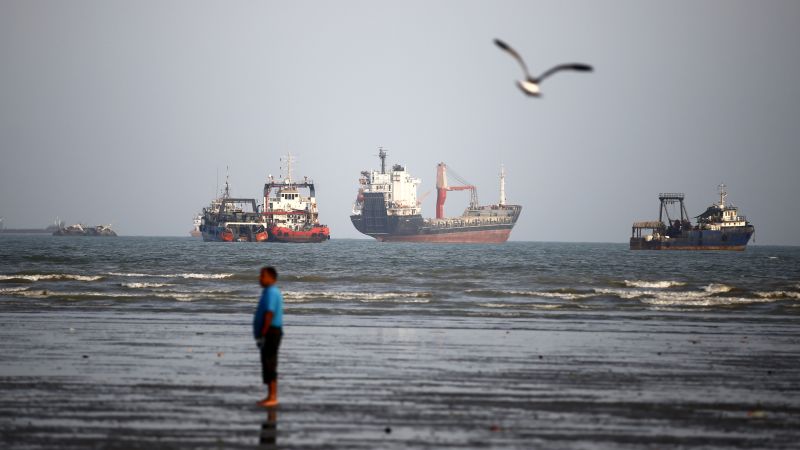
Qwenews.com – An Iranian commercial ship was struck near Qeshm Island in the Strait of Hormuz early Sunday, Iran’s state media said, as the confrontation between Tehran and Washington continues to disrupt one of the world’s most important oil transit corridors.
Iran’s state broadcaster IRIB said one person was killed and four others were wounded in the incident. The state-run IRNA agency cited the governor of Qeshm, who blamed what he described as a “terrorist enemy.” The United States had not publicly addressed the claim, and US Central Command was asked for comment.
The attack comes shortly before planned talks in Oman involving Iran and Gulf Arab governments on the future management of shipping through the strait. Yet the prospects for a broad agreement remain uncertain, with Bahrain saying it would not take part and other attendees not immediately clear.
A chokepoint under strain
Qeshm Island sits near the Iranian port city of Bandar Abbas, roughly 14 miles away, and occupies a strategically important position beside the shipping channel. Before the conflict, about 20 million barrels of oil moved through the Strait of Hormuz each day. Maritime activity through the passage is now estimated to be about 90% below its pre-war level.
The narrow waterway links the Persian Gulf with the Gulf of Oman and the wider Indian Ocean. Its importance means that even a limited strike, a vessel fire, or a new restriction on passage can carry consequences far beyond the region, particularly for energy markets and shipping schedules.
US forces have previously targeted Iranian-flagged vessels while enforcing a blockade of Iranian ports. The US military has also faced renewed Iranian ballistic-missile threats directed at its warships.
A separate maritime emergency unfolded in the strait late Saturday. The United Kingdom Maritime Trade Operations Centre said another vessel had been hit by an unidentified projectile, igniting a fire. Local authorities were assisting with the evacuation of crew members, while details of the ship’s registration were not released.
Diplomatic talks face familiar obstacles
Iran has spent months in discussions with Oman, which controls the shore opposite Iran across the Strait of Hormuz, on possible arrangements for commercial navigation. Tehran has nevertheless tempered expectations that the upcoming meeting will deliver a major breakthrough.
President Masoud Pezeshkian tied any reopening of the waterway to an end to the US blockade during an interview with India Today TV.
The waterway would be opened up on the condition that the US will terminate its blockade.
Ebrahim Azizi, who leads the Iranian parliament’s national security committee, took a similarly firm position in a post on X.
As long as the American side does not accept all of Iran’s conditions, dialogue and negotiation are of no use.
The planned Oman meeting highlights the urgency felt by regional governments, but it also illustrates the central dispute: Iran links shipping access to its broader confrontation with the United States, while commercial traffic depends on predictable and secure passage for ships of many nationalities.
Red Sea tensions add a second maritime front
Developments in Yemen are intensifying the wider concern over sea lanes. Iran-backed Houthi rebels said Sunday that they had attacked a Saudi military base in the Sharurah region with what spokesperson Yahya Saree called a barrage of ballistic missiles and drones. Saree said the targets included weapons storage sites and command-and-control facilities, without giving a date for the attack.
The Houthis have recently increased their military campaign against Yemen’s Saudi-backed government and pushed closer to the Red Sea. On Saturday, they said Saudi forces had carried out 129 airstrikes in areas under Houthi control.
Last week, Houthi forces captured Perim Island at the entrance to the Red Sea. The island divides the Bab al-Mandeb Strait, another vital passage connecting Asian and European trade routes. Its capture has raised concern that Tehran now has effective leverage over a second major shipping route alongside the Strait of Hormuz.
Yemen’s National Resistance Factions, military groups aligned with the Yemeni government, said more than 500 of their fighters had died during the three-week Houthi offensive along Yemen’s western coast.
Saudi Arabia has also taken precautionary steps at home. Riyadh said Saturday that it had temporarily shut its East-West pipeline after a drone strike. Saudi and Iraqi authorities said the attack originated in Iraq, where Iran-backed militias operate.
Earlier in the week, a person familiar with the matter said Saudi Crown Prince Mohammed bin Salman had spoken twice with US President Donald Trump, urging action against the Houthis as they advanced toward the Red Sea. Trump declined to strike the group. Asked about Saudi concerns following the pipeline closure and the effort to move ships through Hormuz, Trump said the situation would “work out fine.”
With two strategic waterways now under exceptional pressure, the immediate challenge for regional leaders is to prevent further attacks from turning an already severe shipping disruption into a longer-term energy and trade crisis.
Related Reading
Frequently Asked Questions
What is Iran reports commercial vessel struck in Strait?
Iran reports commercial vessel struck in Strait is the main topic of this guide. The article explains the context, practical details, and next steps readers should understand.
Why does Iran reports commercial vessel struck in Strait matter?
Iran reports commercial vessel struck in Strait matters because readers are looking for a useful answer, not just a short summary. Good content should match search intent and help them decide what to do next.