
Canada’s Retaliatory Tariffs Take Effect
Qwenews.com – Canada’s retaliatory tariffs take effect at just past midnight Tuesday, imposing duties on roughly $20 billion in annual American exports to the northern neighbor. The package represents the sharpest escalation yet in a trade dispute between the two largest economies on the continent, and its design targets constituencies that matter to Washington’s political calendar.
The measures double the existing levy on aluminum and steel to 50 percent, matching the rate the United States already applies to Canadian metal shipments. Beyond industrial metals, the duties sweep across paper products, construction materials, household appliances, and a wide range of agricultural goods — categories that touch rural districts and suburban supply chains in dozens of American states.
How the Final Round of Talks Collapsed
The two countries, still each other’s largest trading partners, had been locked into a final round of negotiations last month. Those discussions, widely expected to yield a comprehensive deal, fell apart at the eleventh hour. President Donald Trump had initially extended his own self-imposed deadline for imposing tariffs, publicly insisting a deal was close. In the end, negotiators could not close the remaining gaps, and the window shut.
Commerce Secretary Howard Lutnick later attributed the breakdown to last-minute demands from Canadian trade officials, including requests for tariff relief on trucks. Trade Representative Jamieson Greer, meanwhile, denied that disputes over French-language requirements were the factor that sank the talks — a characterization Ottawa’s leadership rejected outright.
The Bombardier Ban Threat and Escalating Rhetoric
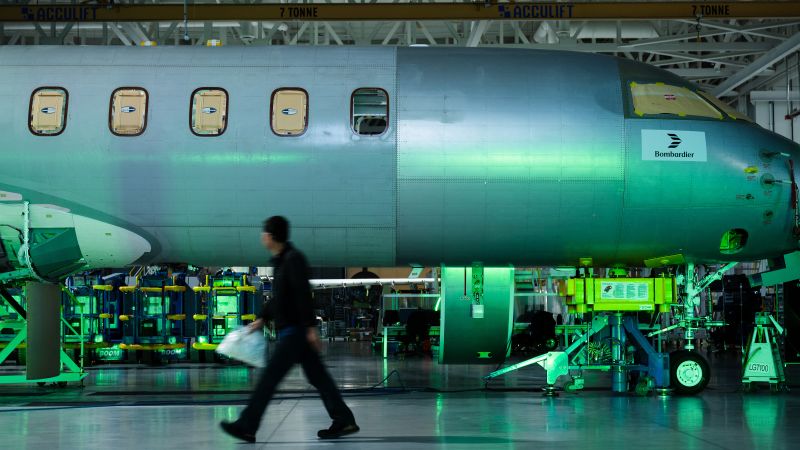
Since the talks collapsed, the public exchange between Trump and Prime Minister Mark Carney has grown increasingly personal. Trump renamed Lake Ontario “Lake America” on social media, threatened to double automobile tariffs to 50 percent effective January 1, and most recently floated a ban on Bombardier — one of Canada’s largest aerospace firms — from selling aircraft in the United States unless the company builds its planes on American soil.
“If they want our Market, they must build here, and stop treating America like a ‘piggybank,'” Trump wrote in a Truth Social post on Monday.
The White House had not confirmed whether a formal ban would be pursued. Bombardier, headquartered in Montreal, responded by emphasizing its existing US manufacturing footprint and ongoing expansion plans within the country.
“The American aerospace industry is a clear winner on trade and exports. Bombardier is a strong contributor to the sector, creating tens of thousands of jobs across the United States,” the company said.
The threat lands in a sector where supply chains are deeply integrated across the border. Regional jet programs, helicopter lines, and business-aviation platforms all depend on components and labor distributed across both countries, making a sudden sales ban a disruption that would ripple through US airports and maintenance depots as well as Canadian factories.
Language, Culture, and the Political Calculus
Carney has framed the dispute not merely as a matter of tariff rates but as a question of whether Ottawa’s cultural protections will be respected. Canadian officials said their American counterparts pressed Canada during the talks to alter rules governing how prominently French-language content appears on streaming platforms, as well as to relax product-labeling requirements that mandate both English and French text on consumer goods sold in Canada.
“For the Americans, questions about the French language, Quebec culture, francophone culture and Canadian culture are irritants. Here in Quebec, here in Canada, they are rights, fundamental rights,” Carney said last month.
Trump dismissed the concern with a breezy social-media remark: “I would never interfere with Canadians speaking French!” He added that he viewed Carney’s insistence on language protections as a domestic political maneuver aimed at consolidating his base in Quebec.
“All of a sudden, they don’t care about Canadian language or culture and those elements. Well, if they didn’t care, they shouldn’t have kept them in the deal,” Carney said last week, pushing back against Greer’s denial.
The timing of the tariff package is not accidental. It lands roughly two months before the US midterm elections, a window in which both governments are acutely sensitive to economic messaging in swing districts and rural counties.
Frequently Asked Questions
What products are covered by the new Canadian duties? The package targets aluminum, steel, paper products, construction materials, household appliances, and a broad range of agricultural goods, affecting roughly $20 billion in annual US exports to Canada.
When did the tariffs take effect? They crossed into force just past midnight on Tuesday, following the collapse of a final round of bilateral trade talks held the previous month.
Will Bombardier actually be banned from selling aircraft in the US? The White House had not confirmed a formal ban as of the latest reporting. Trump floated the idea on social media, but no executive order or regulatory action had been announced.
What happened to the trade negotiations? A final round of talks last month broke down at the eleventh hour. US officials cited last-minute Canadian demands; Canadian officials pointed to unresolved disputes over language and cultural protections.