
A Fictional Football Coach Reshapes a Real London Suburb
Qwenews.com – Twenty minutes by train west of central London, Richmond-upon-Thames has spent centuries earning its reputation through royal hunting grounds, Tudor-era architecture, and the gentle curve of the Thames. Yet in recent years, a new kind of visitor has flooded its cobblestone lanes: fans of a television comedy-drama about an American football coach who stumbles into English soccer. Apple TV’s “Ted Lasso,” now deep into its fourth series, has turned this leafy riverside district into a pilgrimage site for millions of viewers worldwide, and the local economy is feeling the ripple effects.
The show follows Ted Lasso, portrayed by Jason Sudeikis, as he takes charge of a struggling English club armed with nothing but relentless optimism and a talent for well-timed quips. Alongside him are boss Rebecca (Hannah Waddingham), the ball-hog-turned-team-player Jamie Tartt (Phil Dunster), and a constellation of Richmond-based characters whose daily lives unfold against the backdrop of the suburb’s parks, pubs, and waterfront.
The Paved Court and the Thinking Bench
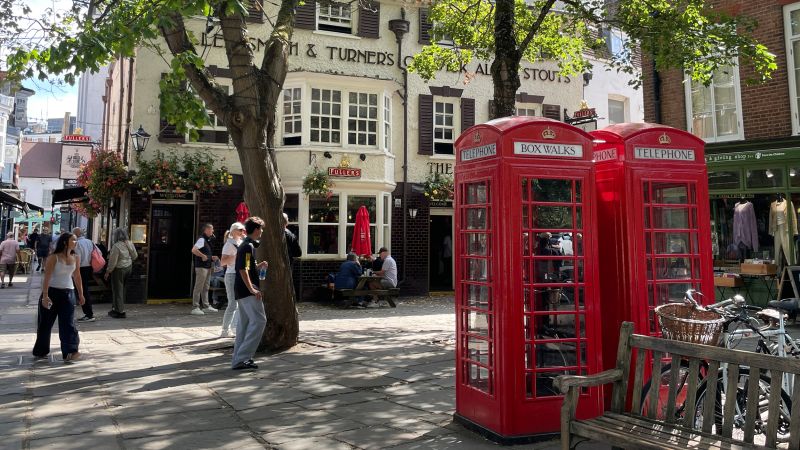
For dedicated followers of the series, the most sought-after address is a narrow lane called Paved Court, lined with small window shopfronts selling deli goods and millinery. In the show, this is where Coach Lasso keeps his apartment. A short walk down the same lane leads to the official “Ted Lasso” retail outlet, where visitors can pick up red-and-blue AFC Richmond match kits and boxes of shortbread labelled “biscuits for the boss.”
At the far end of Paved Court sits The Prince’s Head, a pub dating to the 1700s that doubles as the show’s “Crown and Anchor.” Inside, publican Mae Green (Annette Badland) keeps tabs on her patrons during match nights. Outside, however, the real draw is a wooden bench where fans queue for photographs, recreating the coach’s signature contemplative pose.
“I just love it,” Natalia, a visitor from Brazil, said while standing outside The Prince’s Head. “The first time you watch it, you think the series is about football. But the culture, the messaging — it’s about so much more.”
Richmond Green and the Waterfront
Directly opposite the pub stretches Richmond Green, a broad, tree-lined common that once hosted jousting tournaments for visiting royalty. Today it serves as the show’s version of Coach Lasso’s morning ritual: coffee in hand, a slow walk through the grass, occasionally joining a casual kickabout. Visitors replicate the scene without hesitation, blending into the park’s existing rhythm of picnics and dog-walks.
Further along the river, Richmond claims the longest continuous stretch of the Thames within London’s boundaries. Fans recreate the first date between Roy Kent (Brett Goldstein) and Keely Jones (Juno Temple) by strolling beneath Richmond Bridge, accompanied by the ambient sound of local buskers. The waterfront also hosts a puppet-theatre barge and a pub so close to the waterline that it floods at high tide; the establishment keeps a supply of complimentary gumboots at the door for soaked patrons.
What the Show Cannot Replicate
One element of the fictional world has no physical counterpart in Richmond: the team’s home stadium, referred to in the series as “the dog track.” Match-day scenes are actually shot at Selhurst Park in south London, home of Crystal Palace Football Club. Fans hoping to stand beneath the terraces must travel across the city to experience that particular slice of the show.
For those who want a guided experience, multiple tour operators have sprung up since the series premiered. Ted Lasso Tours, launched in 2022 by Richmond resident Emmy Mac, runs private and group itineraries covering 27 on-screen locations. Mac’s clientele skews heavily American, though she has also welcomed visitors from India, Singapore, and Mexico.
The Local Economy and the Neighbourhood’s Unease
The tourism surge is measurable. Local hotels have logged roughly double the previous volume of American visitors since the show’s debut, a shift documented in trade press coverage of the area’s hospitality sector. The fourth season’s premiere last month set a new benchmark for Apple TV, becoming the platform’s largest single-night launch to date, and the resulting spike in global viewership has translated directly into foot traffic on Richmond’s streets.
Not every resident welcomes the influx. Steve Lloyd, who has called Richmond home since 1992, says he has long since stopped counting the number of tourist photographs in which his face appears in the background.
“I tried to watch it — got 15 minutes in and thought, ‘this is crap,'” Lloyd admitted, though he conceded the show does not necessarily require his approval to reshape his daily commute.
A Suburb with Layers
Richmond’s identity predates any television camera by centuries. The area’s crown jewel, Richmond Palace, was a Tudor royal residence whose surviving fragments now anchor the Royal Hospital Chelsea’s historic precinct. The suburb’s deer park, one of the oldest in England, has supplied venison to monarchs since medieval times. Richmond Theatre, opened in 1899, hosted Rebecca’s charity gala in season one and continues to stage West End transfers and local productions.
The question facing Richmond’s planners and residents is how to absorb a global audience without eroding the quiet, residential character that made the area attractive in the first place. The answer, for now, seems to be coexistence: the thinking bench coexists with the jousting history, the AFC Richmond kit shop with the millinery window, and the busker beneath Richmond Bridge with the centuries-old rhythm of the river. Ted Lasso may be fictional, but the suburb he inhabits is very much real, and its residents are learning to share the cobblestones.
Related Reading
Frequently Asked Questions
What is How Ted Lasso turned a charming?
How Ted Lasso turned a charming is the main topic of this guide. The article explains the context, practical details, and next steps readers should understand.
Why does How Ted Lasso turned a charming matter?
How Ted Lasso turned a charming matters because readers are looking for a useful answer, not just a short summary. Good content should match search intent and help them decide what to do next.