
Record Gas Prices Lock Americans Into Their Homes as Fall Approaches
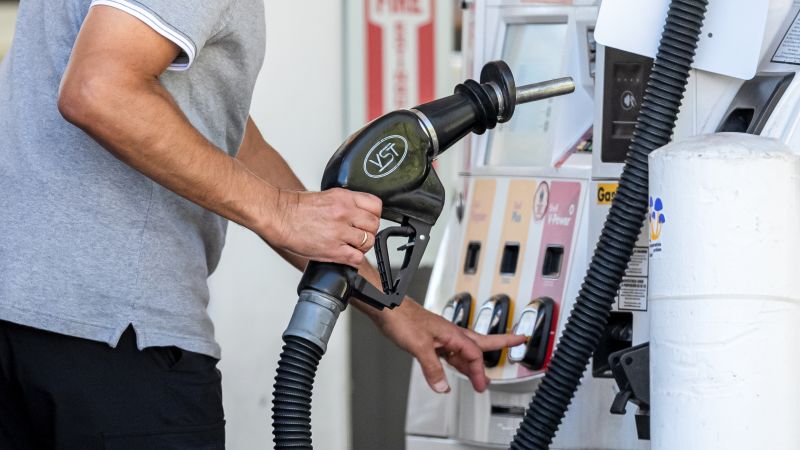
Qwenews.com – The pump has become one of the most visible symbols of America’s deepening affordability squeeze. With crude oil trading near $80 a barrel and the Strait of Hormuz still largely shut to tanker traffic, drivers across the country are paying the highest Labor Day average in history — $4.15 per gallon of regular unleaded, as of this past Monday. That figure shatters every prior September benchmark and signals that the relief many hoped for after a brief late-spring dip has evaporated entirely.
The spike traces back to the US-Iran conflict that erupted in late February, when the national average sat at $2.98 a gallon. Six months later, the gap between then and now has reshaped household budgets, travel plans, and daily commutes from coast to coast. August closed at $4.07 per gallon, the costliest reading for that month on record, a figure AAA spokesperson Aixa Diaz confirmed while noting the price sat roughly ten cents above the 2022 surge that followed Russia’s invasion of Ukraine.
A Retired Teacher’s Summer of FaceTime
For Linda French, 78, a retired schoolteacher in Jonesborough, Tennessee, the numbers translate into a summer spent staring at a laptop screen instead of holding her grandchildren. She had planned a drive of several hundred miles to New York to see her elderly brother, still recovering from hip surgery, and her young great-nieces and nephews. The gas bill made that trip impossible. Airfare, meanwhile, had more than doubled since the flight she booked in March.
French settled into weekly video calls, but the substitute leaves a hollow feeling.
“You can’t hug your family,” she said. “We’re all getting older. It’s hard not to see them.”
She described wanting to tickle her baby relatives’ toes and pinch their cheeks — small, physical gestures that no screen can replicate. Already, she has scrapped plans to visit Washington, D.C., for Thanksgiving and New York for Christmas.
Travel Holds Steady, But the Wallet Doesn’t
Paradoxically, Americans did not stay home in droves this summer. AAA projected that travel over the Memorial Day and July 4th weekends landed essentially flat against last year’s record highs after years of post-pandemic growth. The multi-year streak of surging holiday travel volumes, in other words, stalled — not because people refused to drive, but because the cost of fuel made the trips economically unworkable for many.
Before this year, no Labor Day average had ever crossed the $4-per-gallon threshold. In 2022, prices had already retreated to $3.79 by the holiday after peaking at a then-record $5.02 in June. This year’s trajectory is steeper and, for now, shows no sign of reversing.
Analysts See No Quick Relief
Patrick De Haan, a petroleum analyst at GasBuddy, told CNN that consumers should brace for what will likely be the most expensive September, October, and November on record unless the geopolitical landscape shifts.
“We’ll probably see our most expensive September, October and November, until something shifts with these geopolitical tensions,” De Haan said.
He added that the latest round of strikes between US forces and Iran makes a near-term de-escalation “less and less likely.” Without a ceasefire in the Persian Gulf and a resolution to the Russia-Ukraine war, the structural drivers keeping crude elevated — shipping disruptions, supply-chain anxiety, and OPEC+ output discipline — remain firmly in place.
The Commuter’s Squeeze
Colton Comstock, 28, made a deliberate choice after college: move back home to Johnsburg, Illinois, and funnel savings toward a down payment while chipping away at $60,000 in student-loan debt. The plan assumed a manageable cost of living. It did not assume a 75-mile round-trip commute to his job at a door-and-dock service company would cost him $4.55 a gallon at the pump.
“Rising gas prices is negating the fact that I’m living at home to save money,” Comstock said.
The financial analyst, who still aims to set aside roughly $500 a month for a future home purchase, has been forced to shrink the extra payments he was directing toward his student loans. His visits to the family lake house about 100 miles into Wisconsin — where he used to stargaze and talk with his brothers from the pier — have been reduced to a single trip this summer.
“I’m just trying to do nothing because you can’t afford anything. So I just try to sit at home and chill,” he said.
If prices hold into early next year, Comstock is weighing a more drastic move: selling his 2023 Dodge Charger and trading down to a more fuel-efficient vehicle.
Cooling Off in a Backyard Pool
In New Paris, Ohio, Linda Cook — a former business consultant now on disability — has swapped an hour-long drive to a lake for a small inflatable pool in her backyard. The combination of sky-high fuel costs, inflated electric bills, and rising Medicare premiums has pushed her to trim grocery spending and keep her thermostat set high enough that she struggles to sleep at night. She has also had to eliminate other discretionary expenses to keep the household afloat.
The Broader Affordability Picture
Gas is not operating in isolation. It stacks on top of already-elevated food prices, utility rates, and housing costs, compounding the pressure on middle- and lower-income households. For retirees like French, for young professionals like Comstock, and for disabled individuals like Cook, the effect is the same: discretionary spending evaporates, family connections thin, and the margin for error shrinks to near zero. Until the geopolitical drivers behind the oil spike resolve — and analysts see no credible timeline for that happening before at least the end of this year — the pain at the pump is likely to remain a defining feature of American daily life well into the winter.
Related Reading
Frequently Asked Questions
What is Americans are still struggling with high?
Americans are still struggling with high is the main topic of this guide. The article explains the context, practical details, and next steps readers should understand.
Why does Americans are still struggling with high matter?
Americans are still struggling with high matters because readers are looking for a useful answer, not just a short summary. Good content should match search intent and help them decide what to do next.