
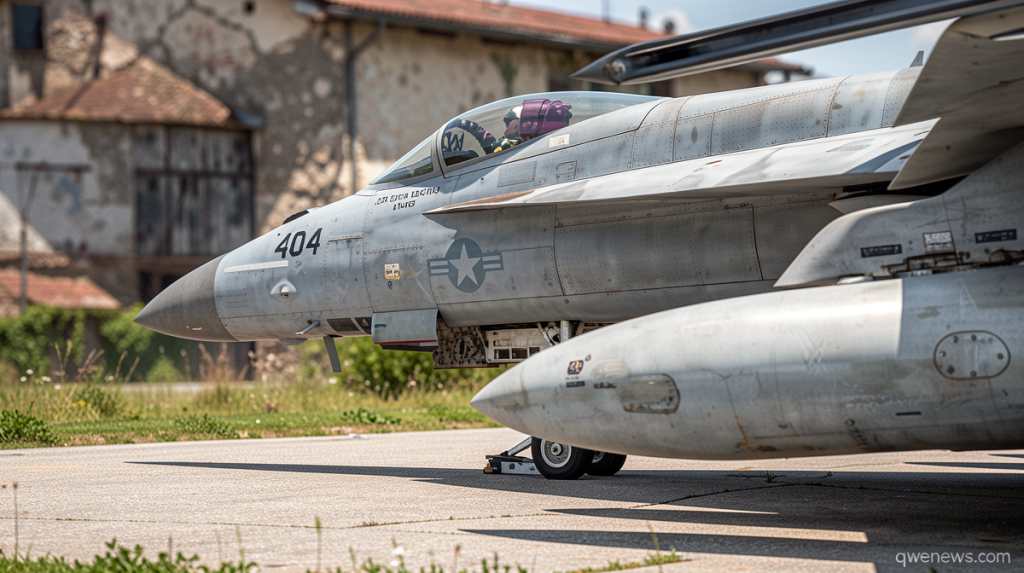
Tit-for-Tat Escalation: US Bombs Iran Again as Tehran Fires Back at Three Gulf States
Qwenews.com – A second wave of American airstrikes hammered Iranian military infrastructure on Tuesday, and within hours Tehran answered with ballistic missiles and drones aimed at Jordan, Bahrain, and Kuwait. The exchange marked the most intense back-and-forth since the two sides last traded blows more than a month ago, shattering a fragile lull that had given both capitals room to recalibrate their strategies.
The strikes landed just as President Donald Trump had publicly threatened that any Iranian counterattack would be met with force “much harder” than what preceded it. Iran chose to test that warning anyway.
Trump’s Ultimatum and Tehran’s Defiance
After CENTCOM confirmed the new bombardment, Trump took to Truth Social to lay out what he framed as a graduated escalation ladder. His message carried the tone of a final notice:
“They will be hit again at a much harder and higher level, but it will not be the biggest attack of them all, that is waiting in the wings and, when it is over, there will be very little left of the Islamic Republic of Iran!”
Tehran’s response was swift and explicit. Iranian officials pledged a “crushing” reply and directed ballistic missiles toward Jordan while sending drones at Bahrain and Kuwait, stating the targets were American military assets stationed in those countries. The decision to strike three separate nations simultaneously signaled that Iran intended to stretch US and allied air-defense resources across multiple fronts at once.
What the US Bombed and When
CENTCOM said the Tuesday strikes were a direct answer to recent Iranian attempts to hit commercial shipping in the Strait of Hormuz and to American troops deployed in the region. The operation began at 12 p.m. Eastern Time and was declared complete more than six hours later, suggesting a sustained, multi-phase campaign rather than a single salvo.
Targets included air-defense sites, radar installations, maritime assets and facilities, mine-laying capabilities, and communications nodes tied to the Islamic Revolutionary Guard Corps. The geographic spread was wide: explosions were reported east of Bandar Abbas and around Qeshm Island near the strait, in the port cities of Chabahar and Konarak on the Gulf of Oman, and at Jiroft Airport in southeastern Iran. A fishmeal factory on Qeshm Island was also struck, according to Iran’s state-run Press TV. An additional blast was heard in Asaluyeh, the Gulf-coast hub for gas and petrochemical operations, per the semi-official Fars News Agency.
Civilian Toll and the Wedding Tragedy
State-affiliated IRNA news agency reported seven deaths in strikes on Khuzestan province, the central region that shares a border with Iraq. Separately, Iranian authorities said shrapnel from one of the US strikes fell on a building hosting a wedding celebration in the coastal village of Kouhestak, in Sirik county in southern Iran. At least four people were killed, including a four-year-old child, and at least 68 others were wounded, Press TV stated. Footage released by the semi-official Tasnim news agency showed thick smoke rising above rubble while bystanders shouted; CNN geolocated the imagery to a residential area consistent with the reported location.
CENTCOM had not confirmed the wedding-casualty claim as of the latest available reporting.
Iran’s Retaliatory Barrage Across Three Countries
Jordan’s military announced it intercepted ten Iranian missiles, with three more landing in remote, sparsely populated areas. No casualties were reported on the Jordanian side. Kuwait and Bahrain each activated their air-defense systems to shoot down incoming drones, according to statements from their respective authorities.
Iran additionally claimed a combined missile-and-drone strike on Erbil, capital of Iraq’s autonomous Kurdistan region, extending the geographic footprint of its retaliation beyond the Gulf littoral.
The Strait of Hormuz: Why Every Barrel Matters
The waterway at the center of this latest flare-up carries roughly one-fifth of the world’s daily oil consumption. Since the US strikes first began on Sunday, two tankers have been hit by projectiles, per maritime intelligence firm Marisks and the United Kingdom Maritime Trade Operations (UKMTO), which monitors commercial shipping traffic. Each incident tightens insurance premiums, slows transit schedules, and feeds directly into futures-market pricing.
On Tuesday, oil futures climbed above $94 a barrel after the new strikes were announced. For consumers in Europe, Asia, and the Americas, that number translates into higher pump prices, elevated shipping costs, and renewed pressure on central banks already wrestling with inflation.
A Strategy in Tension
The escalation complicates a pivot Trump had signaled earlier: moving away from sustained military operations and toward economic coercion. Late Tuesday night, after Iran’s retaliatory salvo, he wrote on Truth Social:
“I’m not trying to force Iran to the bargaining table. I like our position now much better, with almost total control of the Hormuz Strait, and their economy totally collapsing.”
Yet the very act of launching another round of airstrikes while simultaneously claiming a preference for economic pressure creates a mixed signal that markets and allies must parse. If the administration truly intends to lean on sanctions and shipping disruption, continued bombardment of Iranian air-defense and radar networks buys time but also deepens Tehran’s casus belli for further strikes on US bases and commercial vessels.
For now, the pattern is clear: each side has moved from cautious probing to open tit-for-tat, and the interval between rounds is shrinking. The question facing Gulf states, shipping insurers, and energy traders alike is whether the next exchange will be contained within a single night or will cascade into a broader regional war that neither Washington nor Tehran has yet formally declared.
Related Reading
Frequently Asked Questions
What is Iran retaliates after US strikes defying?
Iran retaliates after US strikes defying is the main topic of this guide. The article explains the context, practical details, and next steps readers should understand.
Why does Iran retaliates after US strikes defying matter?
Iran retaliates after US strikes defying matters because readers are looking for a useful answer, not just a short summary. Good content should match search intent and help them decide what to do next.