
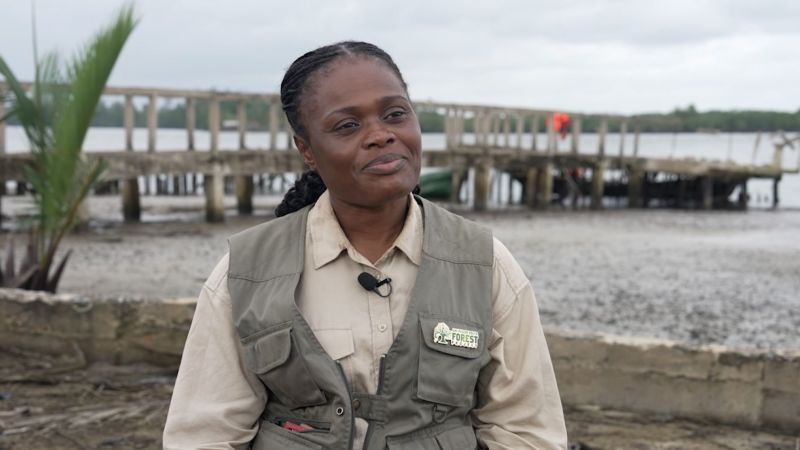
From the Brink: How One Woman Helped Save Nigeria’s Rare Monkey
Qwenews.com – Hidden within the dense swamp forests of the Niger Delta resides a primate that remained a scientific mystery until 1993. In just twenty years following its identification, nearly ninety percent of these creatures vanished. Locals had long been familiar with the Niger Delta red colobus—distinguished by its vivid black, orange, and white fur—but even before scientists formally recorded them, the species was already scarce. Researchers estimated roughly ten thousand individuals inhabited the area at that time.
However, relentless hunting combined with habitat destruction from logging operations and oil infrastructure development pushed the population toward collapse. By 2010, this remarkable monkey had earned a place among the globe’s most critically endangered primates.
A Conservationist’s Urgent Mission
When Rachel Ikemeh, a Nigerian conservationist, arrived in the region during 2013, she recognized the urgency of immediate intervention. The species exists exclusively in Nigeria, with remaining individuals confined to isolated forest fragments spanning seventy-seven square miles across the southern Niger Delta. This ancient territory encompasses twenty-seven thousand square miles and contains Africa’s second-largest swamp forest, the world’s third-extensive mangrove system, alongside crucial coral reefs and marine habitats—territory where these primates once wandered without restriction.
“In my line of work, I was given the impression that communities were always to blame,” Ikemeh shared with CNN. “They’re the culprit, the problem to the natural environment. The ones hunting animals to extinction and the ones driving deforestation.”
Initially hesitant to engage local residents, Ikemeh eventually embraced a different approach. She founded the South-West/Niger Delta Forest Project, a community-driven conservation effort, and journeyed to the Apoi Creek Forest to connect with residents. Through education on conservation principles, animal requirements, and scientific data gathering, she built trust. By 2021, her efforts yielded a two-thousand-five-hundred-acre protected zone, actively monitored and defended by the Apoi community.
Recovery and Expansion
“The Niger Delta red colobus was right at the edge of becoming extinct,” Ikemeh remembered. “But today, as I speak to you, we have the records of four thriving groups, nursing and nurturing their babies. They’re repopulating where conservation areas were created, where habitat restoration is ongoing, and where the forest is now being restored.”
After declining to approximately two hundred individuals, the population has since doubled under the program’s stewardship. Ikemeh never anticipated this initial effort would evolve into a ten-year community partnership. Over time, SWNDFP expanded well beyond its original boundaries, now safeguarding over twenty thousand acres and supporting at least sixteen vulnerable species.
“The only way these monkeys can have a long-term future is for us to scale to other surrounding areas,” Ikemeh clarified.
Extending Conservation to the Sea
Earlier this year, the Rolex Awards Laureate advanced her work by creating Nigeria’s inaugural locally managed marine zone within Foropa Middleton Kingdom, a coastal settlement bordering the Atlantic Ocean. Situated centrally in the Niger Delta, this region has undergone dramatic transformation over recent decades. Sharks, dolphins, sea turtles, and abundant fish schools once populated these waters regularly but have significantly declined.
Multiple pollution sources have devastated the delta. Aging infrastructure, militant sabotage, and unauthorized artisanal refining generate frequent oil spills, while black sand mining—the removal of heavy mineral deposits from coastal areas—adds additional pressure. According to Ikemeh, this environmental degradation compelled fishing communities such as Foropa Kingdom to pursue logging and poaching, further threatening the red colobus’s remaining habitat.
Restoring this region’s ecological health remains essential for the monkey’s continued expansion. Though marine ecosystems differ from swamp forests, Ikemeh recognized once again that community participation proves vital for lasting success.
“When you want something to be sustainable, you want it to be stewarded by the people who live there,” she emphasized.
Related Reading
Frequently Asked Questions
What is How this conservationist fought to bring?
How this conservationist fought to bring is the main topic of this guide. The article explains the context, practical details, and next steps readers should understand.
Why does How this conservationist fought to bring matter?
How this conservationist fought to bring matters because readers are looking for a useful answer, not just a short summary. Good content should match search intent and help them decide what to do next.