
Trump Again Tries to Curb Birthright Citizenship Through New Executive Orders
Qwenews.com – President Donald Trump again tries to curb birthright citizenship and what he calls “birth tourism” by signing new executive orders Thursday. The moves come after a Supreme Court ruling this year that invalidated his previous attempt to limit the constitutional right. These orders appear to tighten existing laws rather than create entirely new restrictions, narrowing the exceptions that allow children born in the United States to non-citizens to automatically receive citizenship.
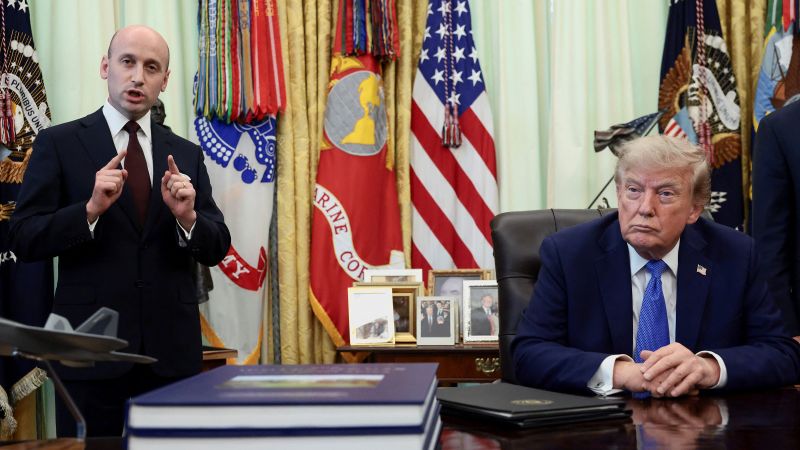
The Court rejected Trump’s earlier effort in June, citing the 14th Amendment’s guarantee of citizenship for anyone born on American soil. “We had a very unfortunate decision in the Supreme Court concerning birthright,” Trump told reporters in the Oval Office. One executive order targets “alien enemies,” members of foreign terrorist organizations, and individuals who lobby for foreign governments—making their children ineligible for birthright citizenship, according to White House deputy chief of staff Stephen Miller.
Targeting Birth Tourism and Foreign Influence
The second executive order focuses on birth tourism, a practice that has drawn criticism from immigration advocates. While US law already prohibits visa applicants from seeking citizenship for their children through US birth, Miller described the new order as a comprehensive ban. The exact mechanism for enforcement remains unclear, as the practice is already addressed in existing statutes.
Axios first reported on these executive actions. The Supreme Court’s June 30 decision included strong language defending birthright citizenship as understood for over a century. Children born on American soil receive citizenship regardless of whether their parents are in the country illegally or temporarily, the Court ruled.
A five-justice majority held that the 14th Amendment guarantees this right, despite conservative dissents. Justice Brett Kavanaugh concluded that Trump’s initial order was barred by federal law rather than the Constitution. Chief Justice John Roberts wrote for the Court: “Citizenship, then and now, was the right to have rights — to freely participate in our political community.”
The Court recognized limited exceptions to the rule, including children born to diplomats and “enemies” during hostile occupation. However, several conservative justices argued the decision would enable birth tourism. Justice Clarence Thomas dissented, writing that the Court “repurposed the Fourteenth Amendment to protect its own set of preferred rights.” Justice Samuel Alito added that the amendment now “confers citizenship on virtually everyone who happens to be born in this country.”
What This Means for Immigration Policy
These executive orders represent a more measured approach compared to Trump’s first attempt to end birthright citizenship. By targeting specific categories rather than attempting a broad constitutional override, the administration hopes to achieve its goals within legal boundaries. The orders address both traditional concerns about foreign influence and the growing issue of birth tourism.
Legal experts will likely scrutinize how these orders interact with existing statutes and constitutional protections. The Supreme Court’s recent guidance provides a framework, but implementation challenges remain. Immigration advocates and critics alike will watch closely to see how these policies affect families and communities across the United States.
“The Framers of the Fourteenth Amendment extended that promise to ‘every free-born person in this land.’ We keep that promise today.” — Chief Justice John Roberts
Frequently Asked Questions
What is birthright citizenship?
Birthright citizenship is the principle that anyone born on US soil automatically becomes a US citizen, regardless of their parents’ immigration status. This right is guaranteed by the 14th Amendment to the Constitution.
What is birth tourism?
Birth tourism occurs when foreign nationals travel to the United States specifically to give birth so their children can obtain US citizenship. While US law already restricts this practice, Trump’s new executive order aims to strengthen enforcement.
How does the Supreme Court ruling affect these new orders?
The Court’s June 2026 decision struck down Trump’s first attempt to end birthright citizenship, citing the 14th Amendment. The new executive orders take a different approach by targeting specific categories rather than attempting to override the constitutional right entirely.
Who is exempt from birthright citizenship under the new orders?
The new orders target children born to “alien enemies,” members of foreign terrorist organizations, and individuals who lobby or act on behalf of foreign governments. Children of diplomats have also long been exempt from birthright citizenship.