
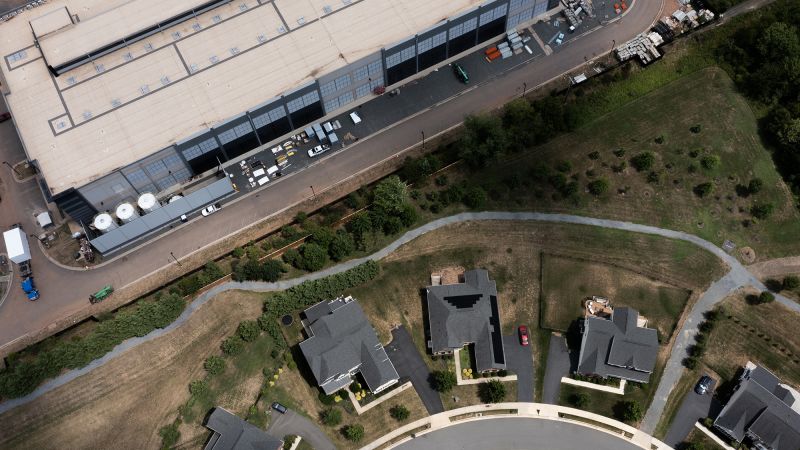
Americans Rally Against Data Centers as Fewer Get Built
Qwenews.com – Americans are rallying against data centers at an unprecedented pace. Political leaders and local communities have joined forces to oppose the rapid expansion of artificial intelligence facilities, with a recent Gallup survey showing that 71 percent of citizens resist these developments. Despite this growing momentum, the perception that AI data centers are proliferating across the nation overlooks significant construction challenges that exist regardless of public opposition.
Why Construction Is Falling Behind
Historical data reveals that approximately 72 percent of scheduled data center capacity typically reaches completion on time, according to Goldman Sachs analysis. However, AI-specific infrastructure faces a different reality. Only roughly half of the computing capacity slated for activation through 2028 is projected to arrive by its intended deadline.
Traditional data center projects normally require 18 to 24 months from groundbreaking to opening, but completion windows are expanding as complications intensify. JPMorgan reports that despite $750 billion in AI infrastructure spending this year alone, facilities struggle to initiate building. Approximately 60 percent of capacity earmarked for 2027 has not yet started construction, and an additional 7 percent of active projects have encountered postponements.
The Reality Behind the Hype
The anticipated American data center surge represents unprecedented growth on paper. Stanford University’s AI Index Report documents 5,427 facilities operating at year’s end, with projections indicating near-doubling. Research firm Aterio notes that AI enterprises have unveiled intentions for 3,969 additional American data centers. Currently, only 802 remain in active construction phases.
Questions persist regarding the authenticity of many proposed facilities. Goldman Sachs observes that developers frequently file concurrent applications across various regions before selecting the most practical location. Columbia Business School real estate professor Stijn Van Nieuwerburgh anticipates that merely 180 gigawatts of the 565 gigawatts currently planned will materialize within ten years—more than tenfold today’s capacity. He characterizes two-thirds of the pipeline as implausible.
“Two-thirds of the pipeline is implausible,” Van Nieuwerburgh states.
This projected expansion still represents approximately $10 trillion in investment, surpassing the nineteenth-century railroad development boom by 50 percent.
Supply Chain and Workforce Challenges
Intense demand for data center development has overwhelmed industry capacity across multiple dimensions. Surging requirements have complicated sourcing of construction supplies, while semiconductor chips housed within these structures face scarcity. Taiwan’s TSMC manufactures nearly all premier AI processors, including Nvidia’s Blackwell and AMD’s MI300X designs. Stanford’s AI Index characterizes TSMC as “a single point of dependency in the global AI supply chain.”
AI operations exert tremendous pressure on electrical infrastructure, creating pronounced supply-demand imbalances. The American Edge Project, an advocacy organization for AI facilities, estimates that data centers currently consume 8 percent of American electricity, potentially rising to 12 percent by 2028. Many AI corporations have responded by developing independent power generation facilities, though this strategy encounters complications: JPMorgan indicates that waiting periods for generation step-up transformers have tripled.
Meeting construction timelines requires substantial labor additions. The American Edge Project calculates that the United States must recruit 500,000 electricians, 300,000 welders, and 550,000 plumbers. Immigration policy modifications have complicated matters further, as contractors struggle to find available workers.
“Some of our clients are developing 24/7/365, and contractors are moving around all day, but there’s nothing they can do if all the labor is tied up in existing projects,” explained Joe Macejak, who leads Marsh Risk’s US property digital infrastructure division.
Political Response Grows
Public resistance has translated into legislative action. Approximately twelve states have introduced moratoriums on data center development, with New York and Texas among the most prominent examples. These political efforts reflect the growing concern among Americans about the pace and scale of AI infrastructure expansion in their communities.
Frequently Asked Questions
How many data centers are actually under construction?
Out of 3,969 planned AI data centers, only 802 remain in active construction phases, according to research firm Aterio.
What percentage of planned capacity will actually be built?
Columbia Business School professor Stijn Van Nieuwerburgh estimates that only 180 gigawatts of the 565 gigawatts currently planned will materialize within ten years, characterizing two-thirds of the pipeline as implausible.
How much is being spent on AI infrastructure this year?
JPMorgan reports that $750 billion in AI infrastructure spending has occurred this year alone, yet many facilities still struggle to initiate building.
What are the main bottlenecks slowing construction?
Key challenges include semiconductor chip scarcity, power grid strain, transformer supply delays, and workforce deficits requiring 500,000 electricians, 300,000 welders, and 550,000 plumbers.