
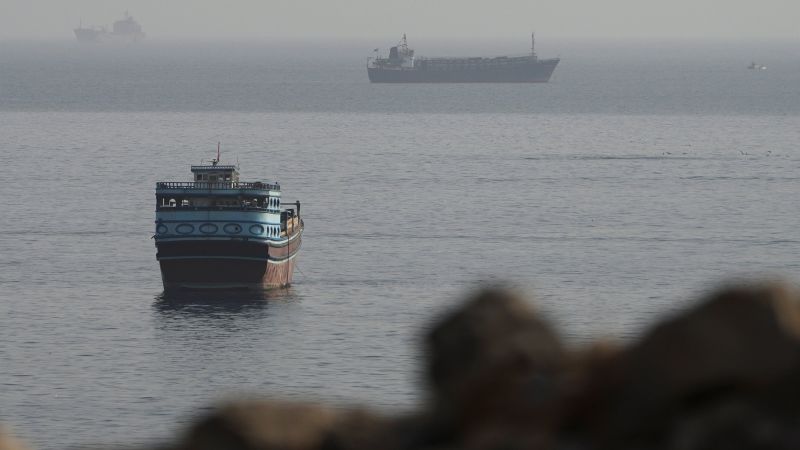
Strait of Hormuz Negotiations Enter Critical Phase Amid Conflicting Signals
Qwenews.com – As rapidly as the winds shift, so too do prospects for resolving the future of the Strait of Hormuz. US President Donald Trump expressed confidence Tuesday that a breakthrough could materialize within days. “It could happen. Tomorrow or the next day,” Trump stated, noting that “a lot of progress has been made” and that parties involved had contacted him requesting further discussions. Despite this optimism, the president maintained his warning of potential military action against Iran if negotiations fail.
Complicating matters is the lack of clarity regarding which parties are engaged in dialogue. Iran continues to assert that it is conducting talks exclusively with Oman concerning a provisional arrangement for the strategic waterway. Meanwhile, other observers remain doubtful about both the timing and durability of any potential agreement. A senior Gulf official with knowledge of the proceedings estimated roughly equal odds of reaching a deal by Friday.
Iran’s Concerns About US Interference
One significant hurdle involves the absence of the Islamic Revolutionary Guard Corps from the Iranian delegation. The hardline military organization must ultimately approve any final terms, according to the Gulf source. This omission may help explain why Trump’s enthusiasm caught Tehran somewhat off guard.
“The main reason for the delay in reaching an agreement with Oman regarding the Strait of Hormuz is US interference and Trump’s threats,” the semi-official Iranian news agency Tasnim quoted an informed source as saying on Wednesday.
The Fars news agency echoed similar sentiments, reporting that certain American officials had “sent mixed signals and, either directly or through regional partners, have disrupted the course of the negotiations.” Fars further noted ongoing concerns that obstruction from Washington or specific regional actors could extend the timeline or otherwise complicate the process.
The Middle Corridor Concept
According to Fars, Iranian discussions with Oman center on establishing a middle corridor designed to protect Iranian interests while addressing Omani concerns. The phrase “Iran’s rights” carries substantial weight in these talks, as competing routes through the strait appear set to merge under a new framework. This arrangement would grant Iran continued influence over the waterway—a development that conflicts with American preferences.
The negotiations should “establish Iranian arrangements because security, de-mining, and maritime services are handled by Iran,” according to Saeed Ajorlu, a member of Iran’s negotiating committee.
Ajorlu explained to Iranian state broadcaster IRIB that Tehran aims to implement temporary arrangements lasting between one and three months during which “Iran is dominant.” Such dominance may prove difficult to sell in Washington or among Gulf capitals, particularly given that oil companies are currently benefiting financially from the ongoing US-Iran conflict—a situation creating political challenges for Trump.
Foreign Ministry spokesman Esmaeil Baghaei described Monday how negotiations have concentrated on converting the southern route, which traverses Omani waters, and the northern route, passing through Iranian territorial waters, into an intermediate passage serving both coastal nations. “We are now talking about a corridor that will have a two-way route, not two or three separate routes,” Baghaei stated.
Conflicting Positions on International Waters
Baghaei, Ajorlu, and other Iranian representatives maintain that the legal framework governing the strait will not revert to its pre-war condition, when no single nation exercised control over shipping through this critical passage. For Tehran, maintaining control or supervision over the chokepoint represents as fundamental a position as the right to nuclear enrichment.
Such leverage appears unacceptable to Washington, Abu Dhabi, and Riyadh. US Secretary of State Marco Rubio has consistently argued that any form of state control over international waters violates international law. “If we create a precedent in the Middle East where a nation state can decide that they are going to control an international waterway,” Rubio remarked recently, “charge a toll and if you don’t pay them blow up your ships, we have created a very dangerous precedent, which will repeat itself in other parts of the world.”
Qatar indicated Tuesday that discussions were progressing, though reconciling the divergent objectives of the two parties remains challenging. Several critical questions persist: Will the Revolutionary Guards consent to diminished authority over the Strait of Hormuz, and what circumstances would trigger vessel interceptions? Does reopening extend to foreign naval vessels, including American ships? What level of cargo and destination information would Iran require?
Additionally, sources report that nearly 80% of interceptors for a crucial missile defense system have been depleted. It also remains uncertain whether any proposed arrangement would remove the American blockade currently imposed on Iranian ports.
Related Reading
Frequently Asked Questions
What is An agreement on the Strait of Hormuz?
An agreement on the Strait of Hormuz is the main topic of this guide. The article explains the context, practical details, and next steps readers should understand.
Why does An agreement on the Strait of Hormuz matter?
An agreement on the Strait of Hormuz matters because readers are looking for a useful answer, not just a short summary. Good content should match search intent and help them decide what to do next.