
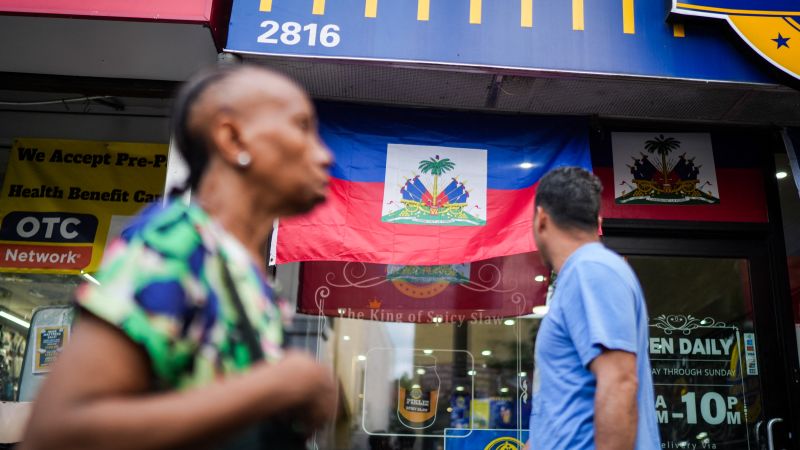
Court Confirms Haitian Temporary Deportation Protections End
Qwenews.com – A federal judge has officially confirmed that temporary deportation protections for Haitian nationals are no longer in place, clearing the path for the Trump administration to begin removing hundreds of thousands of beneficiaries from the United States. This landmark ruling marks the conclusion of a lengthy legal battle that ultimately reached the Supreme Court, bringing closure to a chapter that had kept approximately 350,000 Haitians in limbo.
US District Judge Ana Reyes issued her final order more than a month after the Supreme Court reversed her earlier decision. That previous ruling had temporarily paused the government’s efforts to terminate the Temporary Protected Status program, which had shielded Haitians who fled their homeland during years of political instability and devastating natural disasters.
What the Ruling Means for Haitians
In her judicial order, Judge Reyes explained the shift in circumstances: “The court’s order, which had stayed the effective date of Department of Homeland Security Secretary Kristi Noem’s Termination of the Designation of Haiti for Temporary Protected Status pending judicial review, is no longer in effect.”
This confirmation means immigration enforcement can now proceed without legal obstacles. Haitians who were relying on these protections to remain in the country must now either self-deport or face removal proceedings. The ruling resolves lingering uncertainty that had confused many beneficiaries about when their status would officially expire.
Immigration Enforcement Accelerates
Immigration and Customs Enforcement has already begun targeting TPS recipients, including Haitians, whose protections were scheduled to end. The Wednesday order enables the administration to commence deportations to a nation that the State Department has consistently characterized as dangerous and politically unstable.
“We’re going after them right now,” DHS Secretary Markwaye Mullin told NewsNation this week. “These individuals can either self-deport or we’ll arrest you and send you back. It’s that simple.”
Legal Challenges Continue
Not everyone affected by the program’s conclusion will face immediate consequences. Some beneficiaries may remain protected if they were pursuing alternative immigration relief, such as asylum applications or other claims for legal status. The case under Judge Reyes’ supervision will proceed, with Haitians maintaining their argument that the administration demonstrated discriminatory intent when eliminating the protections.
Similar challenges involving TPS terminations for nationals from Ethiopia, Burma, and South Sudan have seen judges recently block the administration’s plans while evaluating new legal arguments. These developments have triggered public criticism from the Trump administration, which maintains that the status was always intended as temporary.
Evidence and Future Arguments
Reyes, appointed by former President Joe Biden, had partially grounded her initial decision in findings that then-Secretary Noem circumvented legal requirements when concluding the program. The judge also determined that racial animus toward Haitians likely influenced the decision, though the Supreme Court concluded that the evidence currently before her did not substantiate that finding.
Haitian attorneys will now continue searching for supplementary evidence to bolster their position. “Nothing in the decision suggests that the plaintiffs here cannot try to marshal the additional evidence necessary to prove their equal protection claim,” lawyers for the migrants wrote in a court filing last month.
Impact on Elder Care Sector
The termination of Haitian TPS holders will particularly affect the elder care industry, encompassing nursing homes and home care agencies. Even prior to Wednesday’s ruling, certain nursing facilities had begun releasing staff members when their work authorization expired earlier in the week.
Westminster Communities of Florida ended employment for 12 Haitian TPS holders who served as certified nursing assistants, dining services personnel, and housekeepers across its continuing care facilities. Amanda Birch, the organization’s chief human resources officer, informed CNN that the facility would substitute temporary workers as necessary.
Birch acknowledged that the transition presents challenges. “It’s disruptive to residents, as well, to have new team members come in that they don’t really know — when they develop relationships with these prior team members, it’s hard to see them go,” she said.
Frequently Asked Questions
When do Haitian TPS protections officially end? The protections are no longer in place following the federal court’s confirmation that the Supreme Court’s reversal of the stay is now effective.
How many Haitians are affected by this ruling? Approximately 350,000 Haitians were receiving benefits under the Temporary Protected Status program when it was terminated.
Can Haitians still challenge the termination in court? Yes, Haitian attorneys can continue gathering evidence to support their equal protection claims, even though the immediate stay has been lifted.
What happens to Haitians pursuing asylum? Those with pending asylum applications or other immigration relief claims may remain protected while their cases are processed.
How is the elder care sector being affected? Nursing homes and home care agencies are losing Haitian staff members and bringing in temporary replacements, creating disruption for residents who had built relationships with long-term employees.