
Early Insights from Tuesday’s State Primaries
Qwenews.com – Across five states—Michigan, Missouri, Kansas, Virginia, and Washington—voters cast ballots in a series of contests that will shape the upcoming midterm landscape. While results continue to be tallied in several key races, early patterns are emerging regarding ideological divides within the Democratic Party and voter responses to Republican initiatives.
Michigan’s Crucial Senate Contest
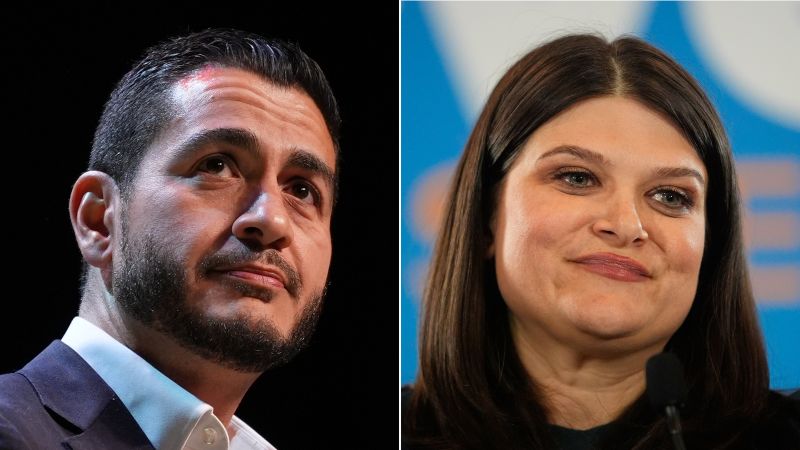
The Democratic Senate primary in Michigan has emerged as the most consequential race of the cycle, pitting progressive former public health official Abdul El-Sayed against moderate Representative Haley Stevens. Both candidates are seeking to succeed retiring Senator Gary Peters, and securing this seat represents a critical component of Democrats’ strategy to achieve the four-seat net gain necessary to control the chamber.
As of early Wednesday morning, the outcome remained uncertain with numerous ballots still being processed. Stevens addressed her supporters at campaign headquarters shortly before 1 am, noting:
We knew this was going to be a close race, and that’s exactly what we’ve got.
El-Sayed delivered his own message to supporters at a separate venue, expressing regret that he could not yet claim victory.
There is so much more that unites us than divides us. And so, to all of our supporters here tonight, watching on TV: Tomorrow we begin to mend fences.
Progressive Challenges Face Setbacks
In St. Louis, moderate Representative Wesley Bell successfully defended his seat against Cori Bush, a democratic socialist and former member of the “Squad.” The rematch carried additional significance given their prior encounters: Bush had unseated a Democratic incumbent in 2020, only to lose the seat four years later to Bell in a primary contest.
The two candidates present contrasting approaches—Bush characterizes herself as a progressive fighter, while Bell positions herself as a consensus builder. Notably, Bell lacks the extended congressional tenure that Bush’s previous opponent, Lacy Clay, held during his twenty-year House career before retiring in 2020. Age also played little role in distinguishing the candidates, with Bush at fifty and Bell at fifty-one.
Sanders-Backed Candidate Advances in Michigan
Democratic socialist and climate activist William Lawrence secured a victory in Michigan’s 7th District primary, defeating two more establishment-aligned contenders. Former U.S. Ambassador to Ukraine Bridget Brink and Navy SEAL veteran Matt Maasdam divided the remaining vote, allowing Lawrence to advance to face Republican Representative Tom Barrett in November.
Lawrence’s campaign has drawn criticism from prominent Democratic figures, including House Minority Leader Hakeem Jeffries and the Congressional Black Caucus. The scrutiny intensified following a Huffington Post publication of Lawrence’s 2024 comments suggesting that Black political leaders “defang the White left.” This contest represents an unusual opportunity to evaluate a Sanders-endorsed progressive candidate in a competitive swing district—a scenario that mirrors what El-Sayed faces in the Senate race.
Voters Reject Republican Ballot Measure Strategy
Missouri voters delivered a decisive rebuke to Amendment 4, a Republican-sponsored proposal that would have required voter-initiated ballot measures to secure a majority in every congressional district within the state. Currently, such measures need only a statewide majority to pass, but the amendment would have enabled heavily Republican districts to effectively block initiatives favored by the broader electorate.
By late Tuesday evening, the amendment had garnered merely twenty percent support, representing a margin larger than typical for similar proposals. This outcome echoed previous rejections: Ohio voters turned down a comparable sixty-percent threshold measure by double digits in 2023, while Arkansas and South Dakota saw similar efforts fail by substantial margins. South Dakota had previously rejected a fifty-five-percent requirement in 2018. Arizona stands as the notable recent exception, having narrowly approved a ballot measure restriction in 2022.
Additional Primary Results
Beyond the headline contests, Tuesday’s elections produced several other notable outcomes. Voters in both Michigan and Kansas selected their gubernatorial nominees, while congressional races in Virginia yielded important results. In Missouri, an incumbent Democrat successfully repelled a challenge from a former congresswoman and democratic socialist seeking to reclaim her previous congressional seat.
Related Reading
Frequently Asked Questions
What is Takeaways from Tuesday s primaries in Michigan?
Takeaways from Tuesday s primaries in Michigan is the main topic of this guide. The article explains the context, practical details, and next steps readers should understand.
Why does Takeaways from Tuesday s primaries in Michigan matter?
Takeaways from Tuesday s primaries in Michigan matters because readers are looking for a useful answer, not just a short summary. Good content should match search intent and help them decide what to do next.