
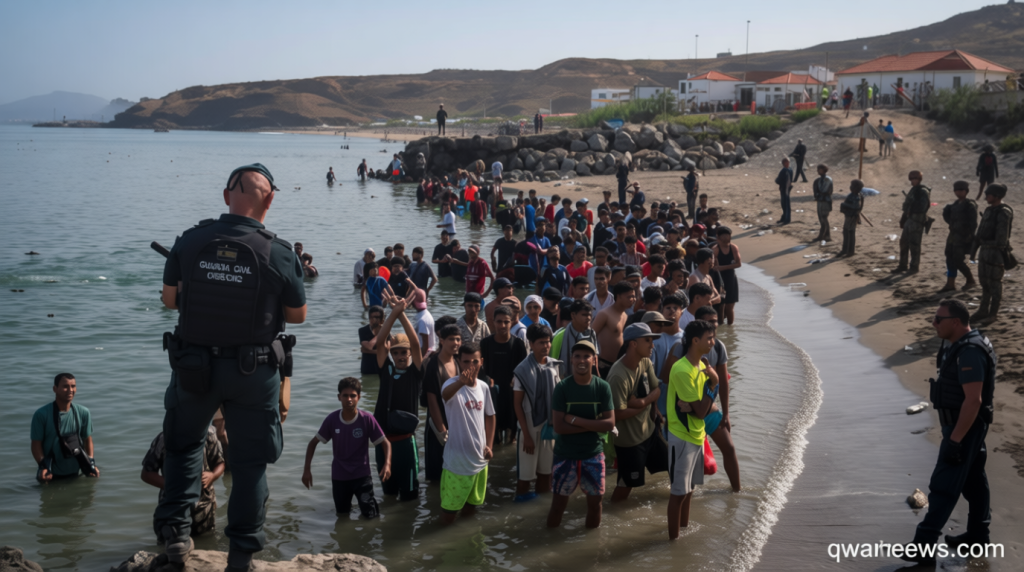
Ceuta Grapples with Aftermath of Border Surge
Qwenews.com – The Spanish enclave has entered a period of recovery following one of its most dramatic migration episodes in recent history. While most of the approximately 60,000 migrants who crossed into the territory have returned to Morocco, the city continues to process the human and political consequences. Maritime rescue teams remain active near the shoreline where tens of thousands made their entry over the past week.
Recovery Efforts Underway
Shops and restaurants have reopened their doors, and the familiar rhythm of daily life is returning to the municipality of 84,000 residents. The community, home to four religious traditions, now faces difficult questions about accountability. Spanish authorities confirmed that at least 72 people died during the crossing—some drowning in the waters while others were crushed in a stampede trying to climb over a breakwater.
The emergency has reignited debates about migration policy throughout Europe. Mohamad Abdelkader Driss, a 44-year-old server at a local seafood restaurant, shared his thoughts on the situation.
It’s not the young men’s fault. If you open the border, of course everyone comes in, but the young men aren’t to blame. The authorities are responsible.
Political Tensions Rise
Several migrants who returned to Morocco described the border as lightly guarded, saying officials seemed passive as crowds poured through. The unauthorized arrivals on Thursday and Friday—between 50,000 and 60,000 people, mostly young men—swelled Ceuta’s population by more than fifty percent. Despite the upheaval, Abdelkader noted that most newcomers behaved calmly.
Spanish far-right politicians and conservative commentators arrived over the weekend, sparking counterprotests by Ceuta’s large Muslim community, many with Moroccan roots. Alvise Pérez, a European Parliament member for a right-wing party, called for migrant expulsions on Saturday evening while facing an angry crowd. When residents began banging on the windows of a nearby establishment, Pérez took shelter inside until police could escort him out.
Noor Ahmed, a 20-year-old student and Ceuta native, protested against the political visitors. She said politicians like Pérez were exploiting the humanitarian emergency for their own purposes.
They just want to take advantage of the humanitarian crisis Ceuta is currently experiencing.
Voices from the Community
Santiago Abascal, leader of the Vox party, visited the city on Sunday and accused the Spanish government of allowing an invasion. He stated that Ceuta and Melilla are the nation’s protective walls, currently left vulnerable by what he called a corrupt administration.
Even residents who value the peaceful coexistence of Christians, Muslims, Jews, and Hindus expressed concern about new tensions. Eva Barrientos, a logistics worker, attended Saturday’s demonstration to watch the right-wing figures up close. She warned that similar events could happen again and questioned whether some foreign-born residents feel more connected to Morocco than to Spain.
In Ceuta, we have always lived together. We have four cultures living very well, without any problems. But the only thing we are realizing now is that there is an enemy within.
Barrientos added that certain residents born abroad show stronger loyalty to their homelands than to their current home.
Global Response
Pope Leo XIV voiced concern on Sunday about the developments in Ceuta, praying for peaceful and just outcomes. Migration has been a central focus of his papacy, a theme he highlighted during a recent visit to the Canary Islands, one of Europe’s main entry points for migrants.
Frequently Asked Questions
How many migrants crossed into Ceuta during the surge? Between 50,000 and 60,000 migrants entered the Spanish territory, with most having returned to Morocco by the time of reporting.
What was the death toll from the border crossing? Spanish officials confirmed at least 72 fatalities, including deaths from drowning and a fatal stampede.
Who are the main political figures involved in the response? Key figures include Alvise Pérez of the European Parliament, Santiago Abascal of the Vox party, and Pope Leo XIV, who issued statements of concern.
What is the current situation in Ceuta? The city is in a recovery phase with commercial activities resuming, though political tensions and community discussions about migration policy continue.