
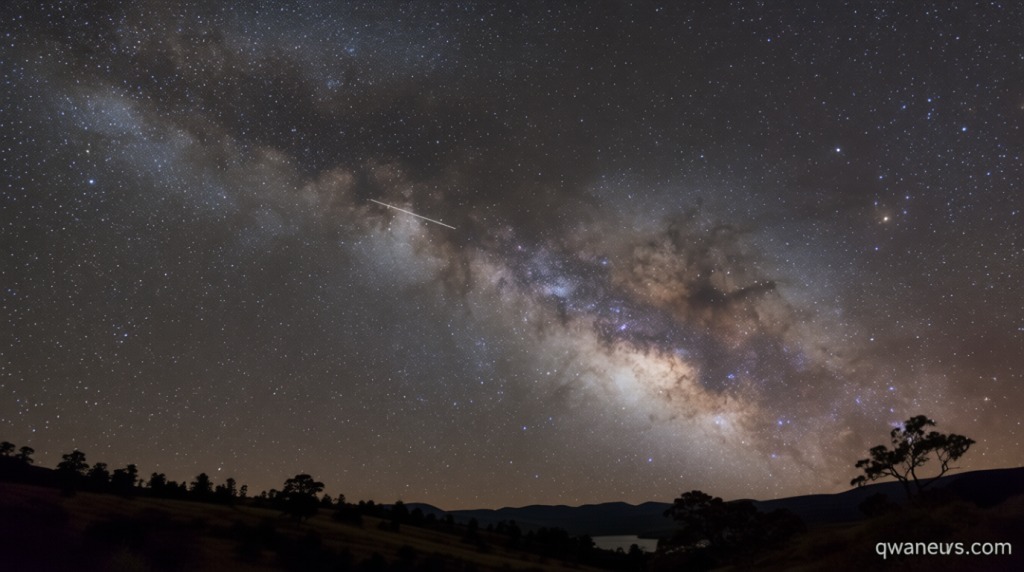
Sky Gazers Can Look Forward to Double Meteor Shower This Week
Qwenews.com – Sky gazers can look forward to witnessing a spectacular celestial event this week as a double meteor shower reaches its peak. However, observers might face challenges catching a glimpse of this cosmic activity due to timing and lunar conditions. The Alpha Capricornids remain active from early July through mid-August, while the Southern Delta Aquariids shine from mid-July to mid-August. Both showers are expected to reach their peaks — the moment when Earth passes through the densest portion of each shower — Thursday night into Friday, according to the American Meteor Society. Additionally, the Perseids will be active during this period, though their peak won’t arrive until mid-August.
Full Moon Creates Viewing Challenges
One significant obstacle for sky gazers can look forward to overcoming is the July full moon, which reaches its fullest appearance on Wednesday. This bright celestial body will cast reflected light that hinders visibility of fainter meteors, according to Bob Lunsford, report coordinator for the American Meteor Society. The Alpha Capricornids and Southern Delta Aquariids occur annually, but a full moon typically limits visibility of a meteor shower peak approximately every three years, Lunsford explained. At a different point in the lunar cycle, these meteor showers would offer optimal viewing when the moon sits below the horizon or before rising. “But with the full moon, it’s up there all night,” noted Bill Cooke, who leads NASA’s Meteoroid Environment Office.
“The meteors are just going to be very difficult to see,” Cooke said regarding the current viewing conditions.
Despite these challenges, sky gazers can look forward to some advantages depending on their location. People residing in the Southern Hemisphere may enjoy a viewing benefit. From this region, the radiant — the point from which meteors appear to originate — sits higher overhead compared to its position above the Northern Hemisphere, Cooke clarified. For optimal viewing, experts recommend positioning yourself facing northward with the moon at your back, ensuring direct moonlight doesn’t compromise your night vision, Lunsford advised. Additionally, viewing from high elevation provides another advantage for catching these celestial displays.
What to Expect from Each Shower
The Southern Delta Aquariid meteor shower radiates from the Aquarius constellation and produces faster-moving meteors. Observers in the Northern Hemisphere typically see around two meteors per hour, while Southern Hemisphere viewers may spot approximately three per hour. Meanwhile, the Alpha Capricornid meteor shower originates from the Capricornus constellation and features brighter meteors that prove easier to identify. This shower produces roughly three meteors per hour as seen from both hemispheres, according to the American Meteor Society.
Meteor showers offer more than just spectacular visual displays. Sky gazers can look forward to gaining valuable scientific insights from these cosmic events. Recording such occurrences helps experts “determine the particles in space that are orbiting and when we intercept them every year,” Lunsford noted. Furthermore, tracking meteor shower patterns contributes to ensuring the safety of human spaceflight operations. Meteor showers reveal what spacecraft and crews might encounter during their missions in space, Cooke explained. With collisions in space becoming an increasing concern, understanding these particle distributions proves essential for future exploration.
While the double meteor shower peak presents viewing difficulties, sky gazers can look forward to better conditions soon. The upcoming Perseid meteor shower will reach its peak in August and is anticipated to deliver a more spectacular display, particularly with clear skies, according to EarthSky. This timing allows observers to catch up on the current event and prepare for what promises to be an even more impressive celestial show.
Here are the peak dates for meteor showers in 2026, according to the American Meteor Society. Stay informed by signing up for the Countdown newsletter to receive updates from CNN Science on the upcoming total solar eclipse and extraordinary space expeditions. Subscribers also gain access to deep dives into the future of space exploration, keeping sky gazers informed about upcoming celestial events they can look forward to throughout the year.