
Could a Lost Civilization Have Walked the Earth Before Us?
A Thought Experiment That Challenges Our Place in History
Qwenews.com – The concept of a pre-human advanced civilization may sound like science fiction, but it has become a serious scientific inquiry. Researchers are now examining whether Earth harbored evidence of intelligent beings long before our species emerged. This investigation stems from a chance meeting between two scientists who questioned an assumption we all take for granted.
“How do you know that?”
Those simple words changed everything. In 2017, Gavin Schmidt, a NASA researcher, posed this question to Adam Frank, an astrobiologist from the University of Rochester. Frank had been contemplating whether extraterrestrial life might experience climate transformations similar to our own. He had been studying other planets, operating under the assumption that no other civilizations had ever existed on Earth. Schmidt’s response caught him completely off guard.
The two scientists began exploring a fascinating possibility: what if an advanced society once thrived on our planet, utilized energy resources, and ultimately destroyed itself? Would their existence leave any detectable marks in Earth’s geological record? They named their investigation the “Silurian hypothesis,” drawing inspiration from a reptilian species featured in the television series “Doctor Who.” Their findings were published in 2018.
Connecting Ancient Climate Events to Modern Concerns
This hypothesis extends beyond looking backward. It also projects into humanity’s future as we rapidly alter global climate patterns through fossil fuel consumption. The idea serves as both a thought experiment and a warning about our collective vulnerability.
“It is a thought experiment, but one that exposes our potential vulnerability globally,” said Katharine Hayhoe, an atmospheric scientist at Texas Tech University, who was not involved in the research.
The investigation gained momentum from a mysterious climate event that occurred approximately 55 million years ago. During this period, known as the Paleocene-Eocene Thermal Maximum, Earth’s temperature indicators became erratic. Global warmth surged by as much as 15 degrees Fahrenheit, causing widespread ecosystem failures. Massive quantities of carbon entered the atmosphere, though scientists remain uncertain whether this resulted from volcanic activity or methane release. The phenomenon was first documented in the 1990s.
Schmidt found this ancient episode particularly intriguing because of its parallels to contemporary climate change. Humans are currently driving temperature increases and species extinctions. Yet this is not the only unexplained geological shift that mirrors our present situation. Other historical periods witnessed oxygen-depleted oceans alongside dramatic temperature rises.
Searching for Hidden Evidence
Frank and Schmidt systematically evaluated the types of evidence that might survive millions of years. Today, urban areas cover merely 1% of Earth’s surface. Human constructions would disappear relatively quickly without maintenance. However, finding traces of civilizations that existed even longer ago presents enormous challenges.
Over millions of years, geological processes continuously reshape the planet. Tectonic movements, volcanic eruptions, and erosion transform landscapes. The Negev Desert in southern Israel represents Earth’s oldest extensive land formation, dating to roughly 1.8 million years. Such surface features alone may not reveal much about ancient societies.
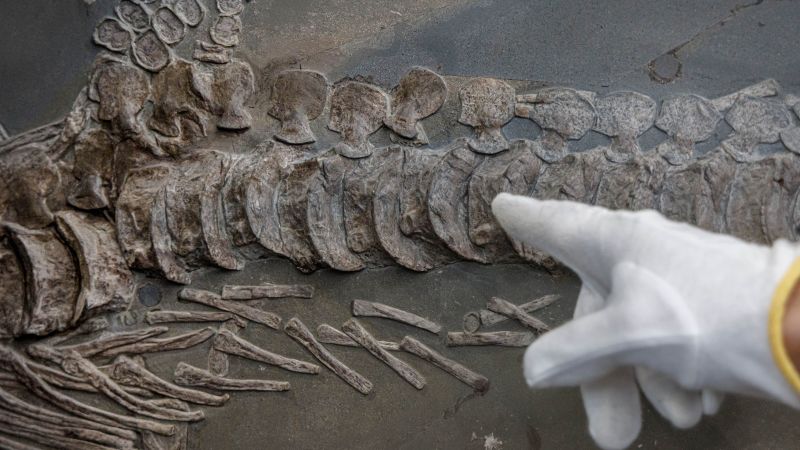
The researchers also examined fossil records. Only a tiny percentage of animal species become fossilized, and an even smaller number are ever discovered. Dinosaurs inhabited Earth for approximately 180 million years, yet scientists have uncovered only a few thousand near-complete specimens. A civilization lasting just 100,000 years would represent a fleeting moment within the 400-million-year timeline of complex life on our planet.
Chemical signatures offer another avenue of investigation. Frank illustrated this concept using the Grand Canyon, where successive layers reveal Earth’s changing chemical composition over time. Each stratum contains crushed rock that preserves information about atmospheric conditions during its formation.
“Every one of those strata is ground up rock that keeps a memory of what the chemistry of the Earth was like then,” Frank explained.
If a previous civilization had modified the planet’s chemistry—much like humans have by emitting enormous quantities of carbon pollution—such alterations might persist in geological layers. The Silurian hypothesis raises fundamental questions about whether all energy-harnessing civilizations face inevitable collapse, or whether sustainable survival across millions of years remains possible.
“These questions are all relevant to exactly the moment that we’re in,” said Frank. “We are pushing the planet into a new climate regime … we know this is true, right? And yet we’re not doing anything about it.”