
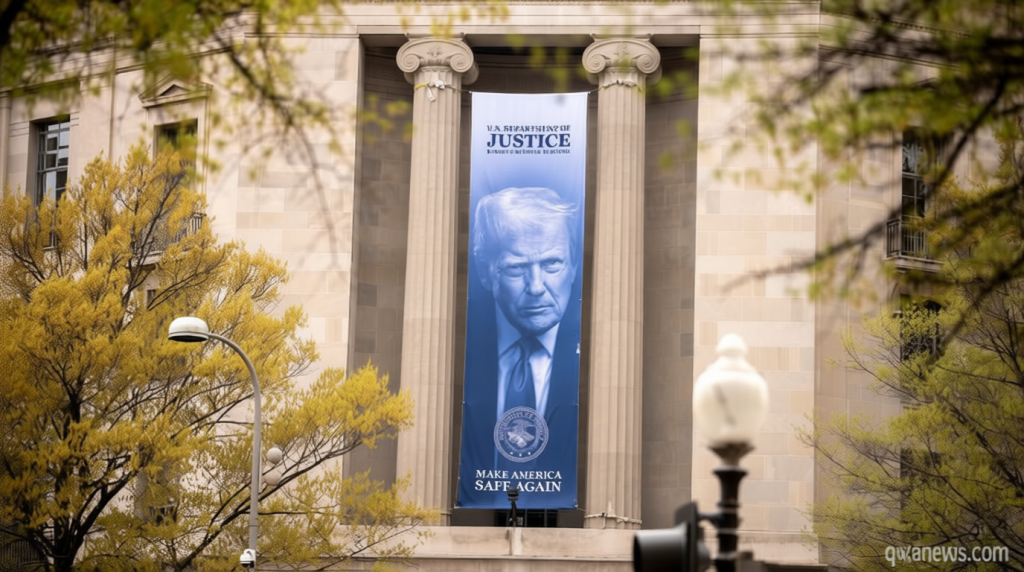
This Court Was Created 30 Years Ago, Now Active
Qwenews.com – This court was created 30 years ago and never heard a single case. The Alien Terrorist Removal Court, established in 1996, operated in near-total obscurity for three decades. Without even an official website to track its proceedings, the specialized tribunal remained dormant until the Trump administration filed what marks its very first case. This filing seeks to employ novel deportation strategies through a legal mechanism that has lain unused since its inception.
A rotating panel of judges has stood ready to hear matters before the court since its founding. Yet no previous federal administration considered any situation significant enough to activate the venue or risk constitutional challenges to its unique procedures. The court grants authorities considerable power to hide their deportation rationale from the targeted individual while restricting many standard appeal channels available to migrants.
First Case Sparks Judicial Scrutiny
Because most proceedings remain confidential, public awareness of the Justice Department’s recent filing stayed limited. What emerged publicly was a judicial order showing the overseeing ATRC judge found the government’s preliminary arguments unconvincing and required additional documentation within the current week.
This court was created 30 years ago through Congress’s passage of the Antiterrorism and Effective Death Penalty Act of 1996. Constitutional questions have lingered since that legislation’s enactment, potentially explaining why earlier administrations hesitated to use the venue. Lawmakers designed the court’s closed procedures specifically to protect state secrets that the Justice Department identified as national security threats if exposed in public forums.
Due Process Questions Emerge
Under the governing statute, individuals classified as “alien terrorists” receive minimal disclosure regarding evidence supporting their expedited deportation. These restrictions have drawn criticism that the court undermines Fifth Amendment due process guarantees, which extend to both lawful and undocumented immigrants living within American borders.
“The ATRC was the absolute last court of choice,” said Andrew Arthur, who managed terrorism matters as a senior attorney at the Justice Department’s Immigration and Naturalization Service during the late 1990s and early 2000s.
During Arthur’s tenure at the agency—which ceased operations following the formation of the Department of Homeland Security—federal authorities concluded that standard immigration proceedings adequately protected classified information in national security cases. Arthur additionally observed that employing the ATRC would inevitably trigger legal challenges requiring Supreme Court intervention.
The precise reasoning behind the administration’s shifted approach remains unclear, though the Trump leadership has demonstrated greater willingness to test legal boundaries. Arthur, currently a fellow at the Center for Immigration Studies—an organization promoting tighter immigration regulations—suggested the matter might involve “an individual who the government concludes has done something very bad, but the very bad thing that the person did is not something they can say in open court.”
He proposed another possibility: “Alternatively, it’s because they want to establish the ATRC as a separate, slightly faster tribunal.”
What Comes Next
Unlike more prominent immigration initiatives from this administration, the Justice Department submitted the case discreetly with sealed documents. Court Watch initially reported the development.
“This Department of Justice will use every tool available to bring alien terrorists to justice and remove them from the United States, including this court established by Congress in 1996,” a DOJ spokesperson told CNN.
CNN legal analyst Steve Vladeck drew a comparison to “Jurassic Park,” noting that “the velociraptors are testing the fences.” He explained the stakes: “If they lose this case, it’s one person who, presumably, they can put in normal removal proceedings. If they win, think of the precedent it creates.”
This development arrives amid other notable events, including an exclusive report on false claims and coverups surrounding the Trump administration’s killing of two American citizens, as well as the withdrawal of subpoenas targeting New York Times reporters by Trump’s Justice Department.