
Grand Juror Questions DOJ’s Controversial Chicago Protest Indictment in Transcripts
Transcripts Reveal Internal Doubt
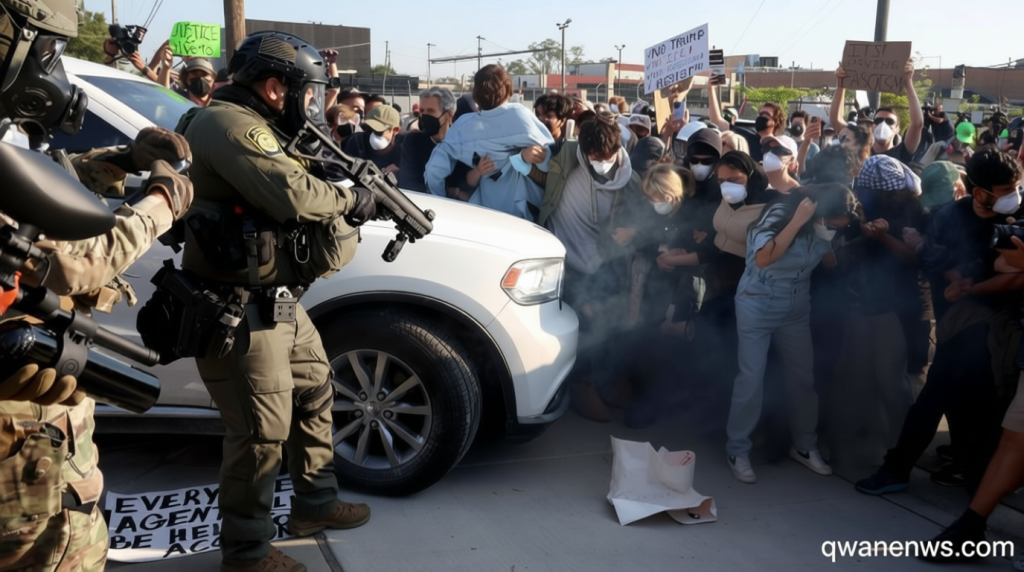
Qwenews.com – Recently released grand jury transcripts have exposed internal skepticism within Chicago’s grand jury panel regarding the DOJ’s controversial indictment of six Democratic protesters. The documents, dated October 2026, show that one juror openly expressed doubt about the legal validity of the charges, questioning whether prosecutors had exhausted their options after the grand jury initially rejected the case. This moment of hesitation, captured in the transcripts, has reignited debates about the fairness and transparency of the indictment process.
“Do you have unlimited tries?” a juror asked, challenging prosecutors just a week after the grand jury had already voted against the case. The DOJ persisted, pushing for approval despite the initial rejection, and the transcripts now provide a rare glimpse into the back-and-forth that led to the final decision.
The indictment, which targeted the Broadview Six, was presented three consecutive times to the grand jury in October. While some jurors remained steadfast in their support, others voiced concerns about the evidence and the political motivations behind the case. The transcripts highlight a pivotal moment when one juror bluntly described the charges as “a crock of shit,” a phrase that has since become emblematic of the skepticism surrounding the DOJ’s actions.
Process Under Scrutiny
The release of these transcripts has intensified scrutiny of the US Attorney’s Office and its leadership, particularly under Andrew Boutros. A federal judge in Chicago had previously criticized the prosecutors’ tactics during deliberations, noting that they leaned heavily on their evidence and inserted personal opinions to sway the jury. This has raised questions about whether the grand jury process was manipulated to achieve a politically driven outcome.
“These transcripts prove that the grand juror called DOJ s controversial indictment repeatedly attempted to say ‘no’ to this sham political charge,” said Christopher Parente, a defense attorney representing one of the defendants. His comments underscore the growing criticism of the prosecutors’ strategy, which some argue prioritized political impact over due process. The transcripts have also been cited by legal experts as evidence of a broader pattern of influence in federal prosecutions.
Political Tensions and Institutional Criticism
The Broadview Six case has become a focal point for discussions about political bias within the Chicago Justice Department. While acting Attorney General Todd Blanche recently endorsed Boutros, a lower-level prosecutor admitted during the grand jury sessions that they had initially resisted political involvement. “I do not want to touch politics with a ten-foot pole,” the prosecutor stated, asserting that the case was purely about enforcing federal immigration law. However, the transcripts reveal that political considerations were deeply embedded in the decision-making process.
More than 100 former employees of the US Attorney’s Office, including notable ex-federal prosecutors, have publicly criticized the office’s handling of the case. They argue that the decision to re-indict the Broadview Six despite earlier rejections reflects a “failure of leadership” and a shift toward using the legal system as a tool for political messaging. This has led to calls for reforms to ensure that grand juries are not unduly influenced by external pressures.
Procedural Flaws and Public Backlash
The grand jury sessions,