
US-Iran Conflict Escalates, Bracing for Full-Scale War
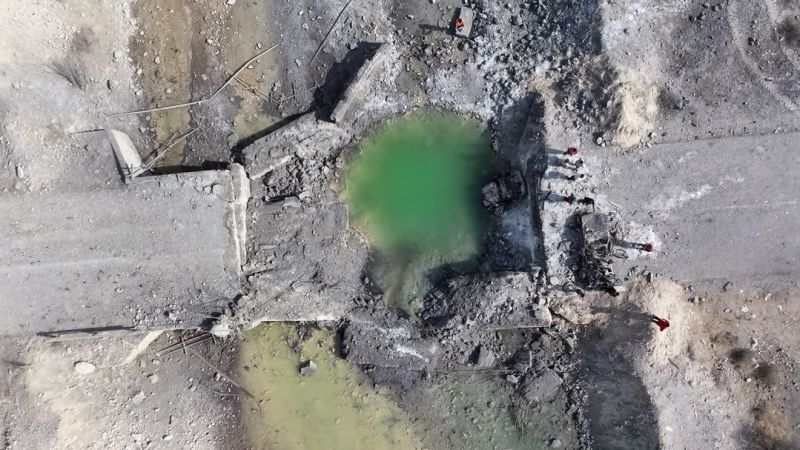
Qwenews.com – The renewed US-Iran conflict has taken a dangerous turn, with both sides intensifying their military actions and signaling a possible shift toward open warfare. Recent developments indicate that the rivalry between the United States and Iran is moving beyond controlled exchanges, as Iran targets critical infrastructure in the region and the US responds with escalating force. President Donald Trump’s warnings about a broader war, should Iran continue its attacks, have added urgency to the situation. Reports suggest the US has expanded its strikes to include strategic facilities such as desalination plants and oil refineries, raising concerns about the conflict’s potential to disrupt regional energy supplies.
Regional Strikes and Escalating Tensions
In a significant escalation, Iran has broadened its attack targets across seven Middle Eastern nations, with Kuwait and Jordan bearing the brunt of recent strikes. A desalination plant in Kuwait suffered heavy damage, while Jordan faced missile attacks that drew international attention. Israel confirmed that shrapnel from the latest strike reached its territory, prompting the country to consider a strong retaliatory response. The US, in turn, has vowed to swiftly punish Tehran, confirming the death of another service member in northern Iraq in its efforts to demonstrate resolve.
“The renewed US-Iran conflict is no longer confined to diplomatic talks or limited military operations,” said Ian Bremmer, founder of the Eurasia Group. “Events are beginning to slip beyond anyone’s control, and the risk of a regional conflagration has grown substantially.”
“Although Washington and Tehran initially appeared interested in keeping the confrontation within certain limits, the conflict is now moving alarmingly close to a point where those limits could collapse,” noted Danny Citrinowicz of the Institute for National Security Studies. “The confrontation could expand well beyond its current scope, drawing Gulf states more directly into the conflict and placing additional strategic targets and critical infrastructure at risk.”
Strategic Posturing and Leadership Dynamics
Analysts suggest that Iran’s confidence in its ability to withstand US pressure stems from domestic support, particularly during high-profile events like Ayatollah Ali Khamenei’s funeral. The current leadership, emerging in the absence of Mojtaba, Khamenei’s son, views resistance as the only viable option. “Any display of restraint will only invite further American pressure,” argued Vali Nasr in the Financial Times. “Iran’s rulers are prepared to endure economic hardship, believing that closing the Strait of Hormuz will force Trump to yield first.”
“There is no evidence for Trump’s claim that Iran is desperate for a deal,” Nasr added. “The focus has shifted from the nuclear program to control over the Strait of Hormuz, a dispute that has become the central issue.”
As the standoff continues, the Persian Gulf faces the prospect of a prolonged and unpredictable conflict. Both sides are pushing boundaries, with the US targeting Iranian infrastructure and Iran retaliating with missile strikes. This cycle of escalation has raised fears that the renewed US-Iran conflict could redraw the region’s geopolitical landscape, drawing more nations into the fray.
International Reactions and the Path Forward
The potential for the renewed US-Iran conflict to escalate has prompted concerns from global powers. While Israel has remained neutral thus far, it has indicated it will retaliate if attacked, highlighting the fragile balance in the region. Gulf states, including Saudi Arabia and the United Arab Emirates, are closely monitoring the situation, with some analysts warning that the conflict could spread beyond Iran and the US into wider Middle Eastern alliances. The United Nations has called for de-escalation, but with both sides showing little willingness to compromise, the path to peace appears uncertain.
As tensions reach a critical point, the renewed US-Iran conflict has become a focal point for global energy markets and regional security. The Strait of Hormuz, a vital chokepoint for oil shipments, remains a key battleground. Analysts caution that if the conflict persists, it could