
An American Blue Crab Took Over Italian Lagoons. Now Fishers Are Looking for New Careers
The Unseen Shift in the Po Delta
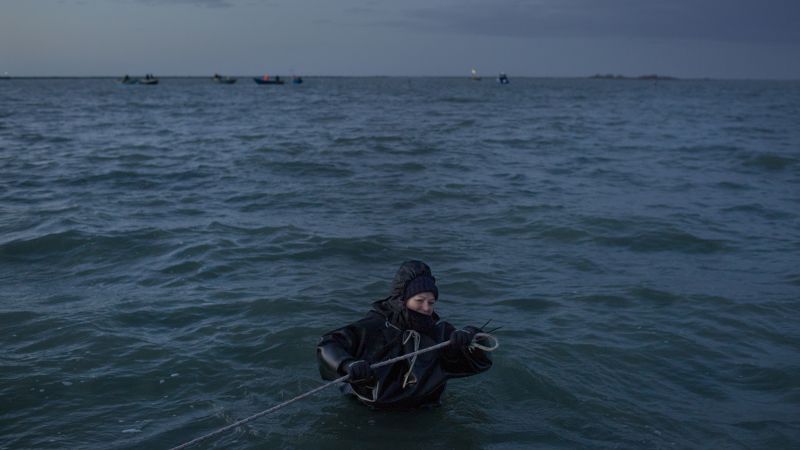
Qwenews.com – At dawn, two women in the fishing trade maneuvered their boat through Scardovari lagoon, nestled in northeastern Italy. Oscarina Soncin stood in what was once Europe’s most prolific clam-harvesting area, her knees brushing against the cold water as she used a metal rake to sift the seafloor. The process stirred up mud, sand, and the prized Manila clams that had sustained local communities for generations. Her partner, Giovanna Pizzo, meticulously sorted the clams from the debris. For over two decades, they collected more than four pounds of clams daily from the Po River Delta, defying stereotypes that women were unfit for such demanding work. Their efforts earned global recognition, including a 2021 profile in National Geographic.
Their livelihoods, once stable, began to crumble in 2023. Instead of finding clams in their nets, they now gathered broken shells with no contents. To meet quotas, they spent longer hours on the water, yet success remained elusive. A new competitor had quietly taken over: the Atlantic blue crab. Once a staple of Maryland and the Gulf of Mexico, this creature now dominated the Po Delta, consuming the clams that had been a cultural cornerstone for centuries.
“My experience has taught me that anything can happen in nature,” Soncin reflected. “The sea can give a lot, but it can also take everything away, and that is exactly what happened to me.”
Climate Change as the Catalyst
Scientists attribute the crabs’ sudden rise to a combination of environmental shifts. The Po Delta’s nutrient-rich waters naturally attracted marine life, but warming oceans and milder winters have created ideal conditions for the crabs to thrive. These changes have allowed the species to reproduce more frequently, sometimes multiple times within a single breeding season. Studies indicate that colder temperatures once limited their population, but today’s climate has reduced fatalities from harsh winters.
Massimiliano Costa, director of the Po Delta Park, explained that the region’s unique ecosystem — shaped by Italy’s longest river and seasonal tides from the Adriatic Sea — supports a surplus of food for marine species. Female crabs rely on saltwater for reproduction, and a severe drought in 2022 allowed seawater to flow upstream, creating an environment conducive to their growth. The following year, heavy rains dispersed crab larvae across the delta, accelerating their spread. These events, paired with decades of increased shipping activity, likely facilitated the crabs’ arrival.
“The introduction of eggs and larvae through maritime transport has likely occurred continuously over several decades,” said Viviana Carli, a field technician with the Po Delta Park. “What seems to have changed were the environmental conditions, which became much more favorable for the species, allowing the population to increase dramatically.”
A Changing Landscape for Fishers
More than 600 local fishers — over 40% of the consortium’s members — have abandoned the trade, according to the group. Many surrendered their licenses, seeking alternative careers. Others remain determined, trying to adapt to the ecological upheaval. The once-thriving clam beds, which had been central to Italy’s seafood industry, now face near-total collapse. The country remains the second-largest producer of Manila clams globally, yet annual harvests in the Scardovari lagoon dropped by 93% in just three years. Some beds have become barren, leaving fishers to grapple with an uncertain future.
“I never imagined … the blue crab could establish itself in the Po Delta, given our climate,” Pizzo remarked, her voice tinged with both resignation and resolve. As the delta’s waters continue to warm, the battle for survival among its marine species intensifies, reshaping the lives of those who once relied on its bounty.