
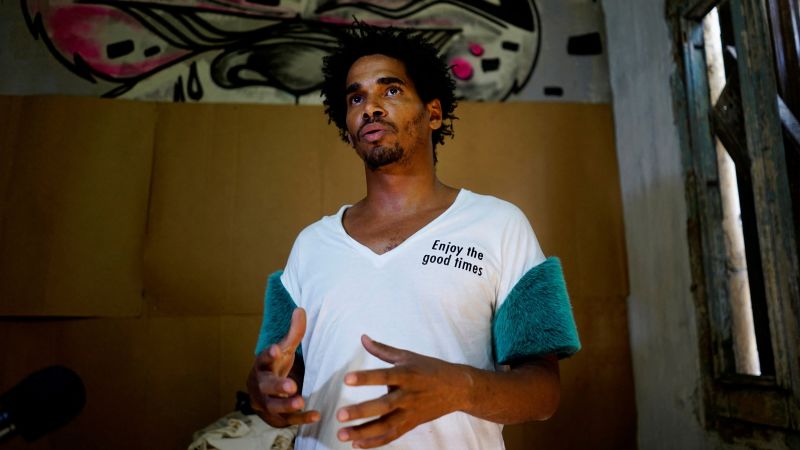
Prominent Cuban dissident to go into exile in the US
Qwenews.com – On Saturday, a prominent Cuban dissident is set to leave the island for the United States, marking a significant moment in the ongoing struggle for political freedom in the Caribbean nation. Luis Manuel Otero Alcántara, a well-known artist and activist, will finally be able to escape the oppressive regime that has kept him incarcerated for five years. His supporters and a US embassy official confirmed the news, highlighting the culmination of years of advocacy and diplomatic pressure. This departure is expected to have a profound impact on both Cuban society and the broader Latin American international community.
Otero Alcántara’s journey into exile has been years in the making. After being arrested during the July 11, 2021, protests, which sparked widespread demonstrations against government control and economic hardship, he has become a symbol of resistance. His release comes after the US embassy successfully lobbied for his immigration parole, a decision that has been celebrated by his allies and human rights organizations. The announcement was made by a family-run Facebook page, which has been a key platform for disseminating information about his case and rallying support for his freedom.
“Luis Manuel Otero Alcántara has accepted exile as the only viable path to continue his work as an artist and activist, given the relentless suppression he has faced under the Cuban regime,” his supporters wrote on the page. “The state security forces have left him with no other choice, and now he will find refuge in the United States.”
Background and Impact of Otero Alcántara’s Activism
Luis Manuel Otero Alcántara was not just a dissident—he was a cultural force whose art and activism challenged the Cuban government’s narrative. As part of the San Isidro Movement, he and others used social media to document the daily struggles of citizens under the regime, from censorship to arbitrary arrests. His work gained international attention, particularly after the release of the Grammy-winning song “Patria y Vida,” which became an anthem for those opposing the Cuban government. The song’s lyrics criticized the regime’s authoritarian policies and symbolized the yearning for freedom among many Cubans.
Otero Alcántara’s activism has been met with harsh consequences. Following the 2021 protests, he was arrested and sentenced to five years in prison, a punishment that has been widely seen as an attempt to silence dissent. His supporters argue that the Cuban government has used his imprisonment to intimidate others who dare to speak out. The decision to grant him immigration parole is viewed as a breakthrough, offering a glimmer of hope to those who remain within Cuba. His departure also underscores the growing influence of the United States in supporting dissidents and promoting democratic values in Latin America.
Political and Social Implications
The timing of Otero Alcántara’s planned exile is symbolic, coming amid heightened tensions between the United States and Cuba. The US has long been a haven for Cuban exiles, and his move is expected to bolster the voices of those advocating for political change. His supporters believe that his presence in the US will strengthen international pressure on the Cuban government to reform its policies and release more prisoners. Additionally, Otero Alcántara’s case has drawn comparisons to other dissidents who have fled the country, such as Orlando Zapata Tamayo, whose 2003 imprisonment sparked global outrage.
While the Cuban government has not officially commented on his departure, the silence has been interpreted as a sign of its strategic retreat. His release allows him to reunite with his family, a crucial step for his well-being and future activism. The impact of his exile extends beyond personal freedom; it represents a shift in the Cuban political landscape. Analysts suggest that his departure could inspire more citizens to join the movement for change, particularly as the government faces growing criticism for its human rights record. This development also highlights the role of international diplomacy in shaping domestic outcomes in Cuba.