
Why Lebanon May Hold the Key to the Future of the Iran War
Qwenews.com – The escalating Iran-Israel conflict has brought Lebanon to the forefront of regional geopolitics, with its unique role potentially shaping the trajectory of the broader war. As a critical battleground and a strategic ally to Iran, Lebanon’s fate is increasingly tied to the stability of peace negotiations between Tehran and Jerusalem. The country’s Hezbollah militia, backed by Iran, has become a central actor in the conflict, and its actions in southern Lebanon have drawn intense scrutiny from global powers. Understanding Lebanon’s significance is essential to grasping the nuances of this complex war, which has implications far beyond its borders.
Lebanon’s Strategic Importance in the Conflict
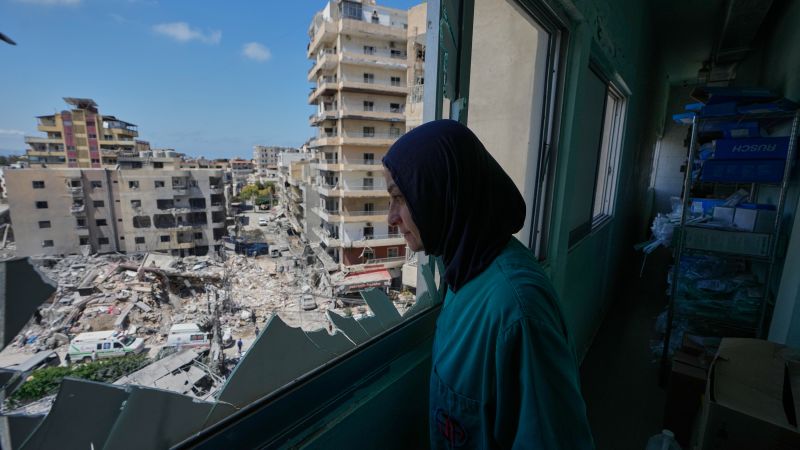
Lebanon’s geographic position, nestled between Israel and Syria, makes it a vital corridor for military movements and supply lines. This has turned the nation into a frontline zone where Hezbollah’s operations against Israeli forces directly impact the balance of power. The recent 12-hour exchange of fire between Israel and Iran underscored how Lebanon’s strategic assets—such as its border areas and port cities—are being leveraged to escalate tensions. Iran’s Revolutionary Guard Corps has emphasized that continued Israeli strikes on Lebanese territory could trigger far more severe measures, signaling a clear shift in how the conflict is being managed.
“The escalation in southern Lebanon demonstrates that the war is not just a clash between Israel and Iran, but a test of Lebanon’s ability to withstand external pressures while maintaining its own political autonomy,” noted a regional analyst in a recent assessment. “Hezbollah’s resilience and Iran’s commitment to its support will determine whether the country becomes a pawn or a pivotal player in the regional conflict.”
The Evolving Dynamics of the US-Iran Ceasefire
The April ceasefire agreement between the United States and Iran, initially seen as a breakthrough, has faced growing challenges due to Lebanon’s inclusion in its terms. Israeli leaders, including Prime Minister Benjamin Netanyahu, have questioned whether Lebanon should be part of the deal, arguing that the militia’s attacks on Israeli targets justify continued military action. This debate has exposed the fragility of the agreement, with Iranian officials and Pakistani mediators insisting that Lebanon’s role is non-negotiable. The standoff reached a critical point when Trump’s intervention pressured Netanyahu to suspend strikes, highlighting the diplomatic maneuvering at play.
Despite the temporary pause in attacks, Iran’s dual strategy of entangling the conflict with Hezbollah’s operations has kept the situation volatile. The militia’s presence in Lebanon allows Iran to project power into the region without direct confrontation with Israel, creating a delicate equilibrium. Analysts warn that any perceived betrayal by Lebanon could lead to a breakdown of the ceasefire, reigniting hostilities and shifting the conflict’s focus to the eastern Mediterranean. This underscores the idea that Lebanon may hold the key to whether the Iran war continues its current course or spirals into a larger regional war.
Political Priorities and Regional Implications
As the war intensifies, the competing priorities of US President Donald Trump and Israeli Prime Minister Benjamin Netanyahu have come into sharper focus. Trump, concerned with economic stability and Iran’s influence in the Strait of Hormuz, sought to maintain the ceasefire to prevent further escalation. Netanyahu, however, prioritized military victories against Hezbollah, believing that dismantling the militia’s capabilities would weaken Iran’s foothold in the region. This divergence in objectives has left Lebanon as a battleground for broader ideological and strategic goals, with the country’s survival hinging on the alignment of these interests.
Lebanon’s position in the conflict also raises questions about its sovereignty. While the country has maintained a policy of neutrality, its alignment with Hezbollah has drawn ire from Israel and the US. The recent strikes on Beirut, coupled with Iran’s retaliatory missile attacks, have forced Lebanon to choose sides in a war that threatens its political and economic stability. This dilemma highlights how Lebanon may hold the key to the future of the Iran war, as its actions could either sustain or disrupt the fragile peace process.
With midterm elections looming for Trump and parliamentary elections approaching for Netanyahu, the pressure to secure victories in both domestic and international arenas has intensified. The conflict in Lebanon has become a litmus test for their leadership, with each decision carrying significant weight. For Lebanon, the outcome of this tug-of-war between the US, Iran, and Israel will determine its future as a regional power or a vulnerable state caught in the crossfire. As tensions continue to rise, the question remains: will Lebanon remain a strategic asset or become a casualty of the Iran war?