
Operation Boomerang: US and Iran’s Military Escalation Lacks Clear Path
The Resurgence of Hostility
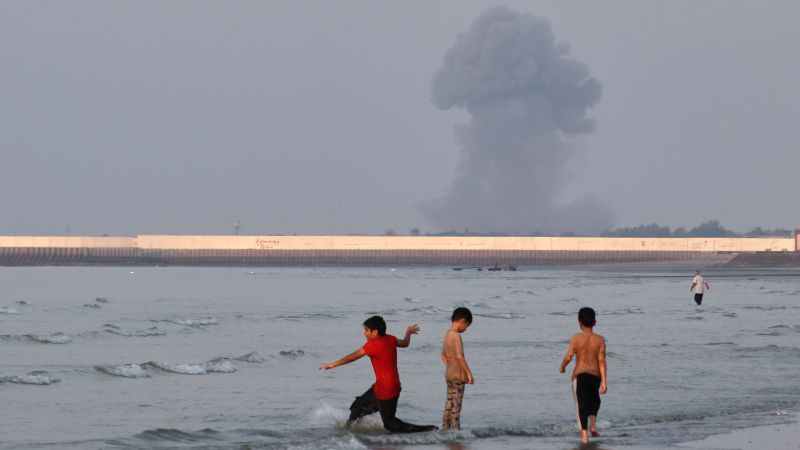
Qwenews.com – Operation Boomerang, the latest chapter in the long-standing US-Iran tensions, has reignited the cycle of military confrontations that have defined the region’s stability for years. This renewed standoff follows a 60-day memorandum of understanding (MOU) signed between the United States and Iran during the Trump administration, which aimed to ease sanctions in exchange for Iran’s promise to safeguard shipping in the Strait of Hormuz. However, as the agreement approaches its midpoint, the situation has shifted dramatically, with both nations engaging in a series of strikes that have undermined the very purpose of the MOU. The US has reactivated its military presence in the region, while Iran has demonstrated its resolve through coordinated attacks, signaling a return to brinkmanship that leaves no clear resolution in sight.
Strategic Ambiguity and Its Fallout
The MOU’s vague terms have sown confusion, creating a vacuum for both sides to interpret their obligations differently. Initially, the agreement was designed to offer Iran a pathway to economic relief while ensuring the free flow of energy shipments through the strait—a critical artery for global trade. Yet, as tensions rose, the US quickly moved to reassert control, imposing new restrictions on Iranian ports and positioning itself as the “guardian” of the region. This shift has led to a breakdown in trust, with Iran responding by launching attacks that target commercial vessels and disrupt supply lines. Brett McGurk, a CNN global affairs analyst, highlights that the lack of clarity in objectives has become a central flaw, with military actions spiraling beyond their original intent.
“When a leader lacks a clear vision, the outcomes of military operations often take on a life of their own, driven by the urgency of the moment rather than long-term strategy.”
Trump’s strategy, as outlined in the MOU, was to balance economic concessions with military deterrence. However, the ambiguity of the agreement allowed Iran to test the limits of the US commitment, resulting in a series of strikes that have forced Washington to respond in kind. The cycle of escalation continues, with neither side willing to yield, and the once-promising framework of the MOU now resembling a catalyst for further conflict.
The Human and Economic Toll
As the Operation Boomerang unfolds, its consequences extend beyond political rhetoric, impacting everyday lives and global markets. The attacks on commercial ships in the Strait of Hormuz, which handles 20% of the world’s oil trade, have already caused disruptions, with oil prices fluctuating in response to the heightened risk. The targeting of an Indian crew in a recent incident underscores the potential for collateral damage, raising concerns about the humanitarian cost of the conflict. Analysts warn that such disruptions could lead to supply chain crises, affecting energy prices worldwide and complicating efforts to stabilize the region.
Meanwhile, the military actions have strained diplomatic relations, with the MOU’s terms now seen as a failed compromise. The initial strikes, intended to demonstrate US resolve, have instead emboldened Iran to pursue its own aggressive posturing. The interplay between these two strategies has created a situation where neither side can claim a decisive advantage, leading to a state of perpetual tension that hinders progress and increases the likelihood of further hostilities.
Geopolitical Dynamics and Regional Implications
Operation Boomerang has not only tested the resilience of the US-Iran relationship but also reshaped the geopolitical landscape of the Middle East. With Iran leveraging its strategic position as a key chokepoint for global energy, the conflict has drawn the attention of international actors, including regional allies and global trade partners. The US, by reestablishing its military dominance, has signaled its intent to protect its interests, while Iran has asserted its ability to challenge that presence through asymmetric warfare. This dynamic has created a delicate balance, where the threat of escalation looms over every decision, and the potential for a wider regional war is now more tangible than ever.
Additionally, the ongoing strikes have influenced the broader strategic calculus of nations bordering the Strait of Hormuz, such as the United Arab Emirates and Saudi Arabia. These countries, which rely heavily on energy exports, are now forced to navigate the dual pressures of supporting their ally and ensuring the safety of their own maritime interests. The international community, including the European Union and other economic partners, is also watching closely, as the conflict threatens to impact global energy markets and trade routes, with far-reaching economic implications.
The Path Forward
As Operation Boomerang reaches its current phase, the question remains: can a path to de-escalation be found? While the initial MOU offered a framework for cooperation, its implementation has faltered under the weight of competing priorities. Both the US and Iran now face a critical juncture, with the need to redefine their goals and find common ground in a volatile environment. The renewed military strikes have served as a reminder of the stakes involved, with the potential for further conflict growing as the cycle of retaliation continues.