
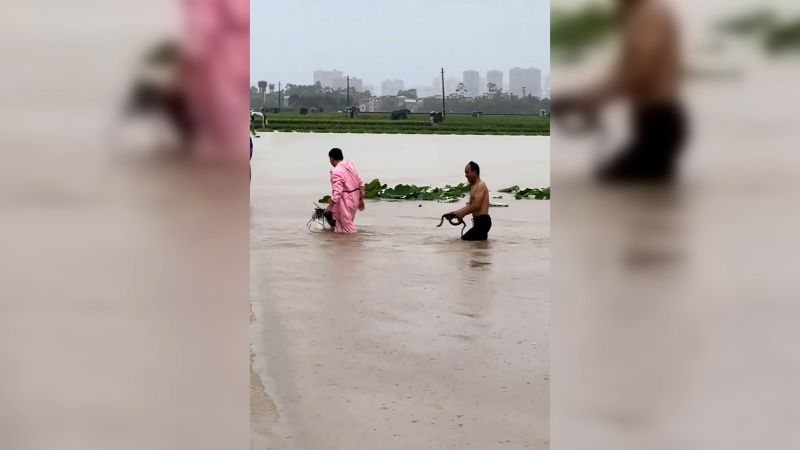
Devastating Floods and a Snake Influx Hit Hengzhou, China
Qwenews.com – Torrential rains bring devastating floods to Hengzhou, a southern Chinese city with a population of around one million, triggering an unprecedented crisis. The relentless downpours, attributed to Typhoon Maysak, unleashed floodwaters that submerged homes, streets, and infrastructure, creating chaos for residents. Amid the deluge, a startling phenomenon emerged: a surge of snakes, including venomous species, began roaming the city unimpeded. State media reported that nearly 900 snakes escaped their enclosures, contributing to 39 fatalities. A woman was bitten by a cobra, possibly from a flooded reptile farm, marking a critical turning point in the disaster’s impact.
Escaped Animals and Public Warnings
Floodwaters not only inundated urban areas but also disrupted animal enclosures, leading to a wave of wildlife incursions. Residents shared harrowing footage of snakes navigating flooded streets, their heads bobbing above the water like periscopes. Authorities initially downplayed the threat but have since issued urgent advisories, deploying specialized snake catchers and stockpiling antivenom to mitigate risks. The situation escalated further when a regional zoo, Guigang Zoo, faced its own crisis, with two zebras, a humpback ox, three miniature horses, and two donkeys fleeing into the wild. The zoo warned that animals such as ostriches and raccoons might exhibit aggressive behavior under stress.
“We could not allow predators to escape during the flood and create an additional public safety risk,” said Yin Feifei, the zoo’s owner, in an interview with local media. Staff members braved rising waters to secure enclosures, though three lions tragically drowned in the process. The incident highlights the fragile balance between human settlements and natural ecosystems, particularly in a region prone to extreme weather events.
Local media documented the staggering losses caused by the floodwaters, including the displacement of over 16,000 pigs. Videos showed workers using heavy machinery to retrieve the animals, a scene reminiscent of arcade claw games. Hengzhou, known as China’s “jasmine capital,” has long been a hub for snake breeding due to its geography—surrounded by mountains and rivers—that supports a diverse ecosystem of over 100 snake species. The floods disrupted this delicate ecosystem, forcing snakes to seek higher ground and increasing human-animal encounters.
From Food to Industry: The Snake Economy
Torrential rains bring devastating floods that have forced a reevaluation of Hengzhou’s snake industry, which has traditionally relied on snake meat for culinary and medicinal purposes. Cobras and common rat snakes are the most frequently bred species, with the latter posing no threat to humans. However, the floods have turned this industry into a daunting challenge for authorities, who now scramble to manage the influx of venomous snakes. The crisis has exposed vulnerabilities in the city’s infrastructure, particularly in snake farms and zoos that were ill-prepared for the scale of the deluge.
“We caught two or three thousand in two days—basically cleared them all out,” explained Mr. Zhu, a member of a civilian snake-catching team, to Beijing News. The team, composed of seven to eight individuals, works closely with villagers to identify and capture snakes, returning them to the wild after careful handling. This grassroots effort complements the city’s official response, demonstrating the collaborative nature of disaster management in Hengzhou.
As floodwaters recede, the city faces the lingering threat of snake bites and the broader economic and infrastructural fallout. The floods have not only displaced thousands of animals but also disrupted supply chains, damaged businesses, and strained public resources. With Hengzhou’s reputation as a key player in the snake trade, the crisis underscores the interconnectedness of nature and industry in the region. Experts warn that such events could become more frequent, emphasizing the need for improved disaster preparedness and wildlife management strategies.
Torrential rains bring devastating floods that have created a unique challenge in Hengzhou, where floodwaters have turned the city into a temporary habitat for thousands of snakes. The situation has prompted a heightened state of alert, with residents advised to avoid flooded areas and carry antivenom if possible. Emergency services have been working around the clock to rescue both people and animals, with some daring to enter waist-deep water to retrieve livestock. The event has also sparked a debate about the long-term sustainability of snake farming in flood-prone regions.
Local authorities have implemented strict protocols to manage the snake influx, including setting up temporary shelters for displaced animals and launching public awareness campaigns. The floods have disrupted daily life, forcing schools to close and businesses to halt operations. In the days following the disaster, officials focused on clearing streets and restoring essential services, while also addressing the rising number of snake sightings. The incident has raised questions about the city’s ability to adapt to extreme weather events, which are expected to intensify due to climate change.