
Nigel Farage Quits UK Parliament Amid Financial Donations Controversy
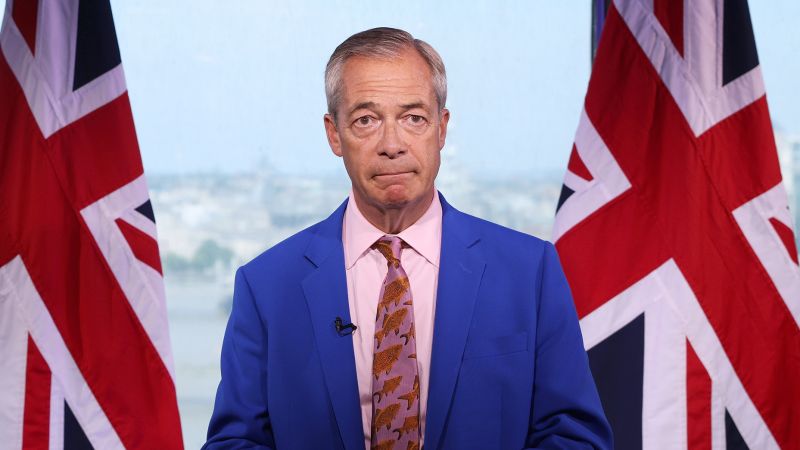
Qwenews.com – Nigel Farage has announced his resignation from the UK Parliament, marking a significant moment in British politics. The Reform UK leader stepped down after facing intense scrutiny over the sources of his wealth, which has sparked a broader debate about financial transparency in public office. His decision, made public through a video on his YouTube channel, sets the stage for a by-election in his Essex constituency, Clacton-on-Sea, where he plans to seek re-election. This move has drawn mixed reactions, with critics arguing it aims to divert attention from allegations of questionable donations, while supporters view it as a bold political strategy.
Strategic Resignation and By-election Implications
Farage’s resignation appears to be a calculated move to control the narrative around his financial dealings. By resigning, he has effectively paused the parliamentary inquiry into his personal finances, allowing him to focus on campaigning for his seat. The by-election, scheduled for [date], will determine whether he retains his position or faces a challenge from other candidates. This tactic has been praised by some as a way to “reset the debate” and give voters a fresh opportunity to assess his leadership.
“Let me be absolutely clear—I have done nothing wrong. I have not broken the law in any way at all,” Farage stated in his resignation speech. “I’ve decided the people of Clacton should be the judges of my actions. I will fight to win. I will fight to continue the political revolution that Reform has started.”
Financial Scrutiny and Key Allegations
The controversy surrounding Farage’s finances has intensified in recent weeks, with new reports revealing significant donations from undisclosed sources. The Sunday Times reported that he failed to disclose payments from George Cottrell, a businessman convicted in 2016 of money-laundering and other financial crimes. Cottrell, who served eight months in prison, settled with U.S. prosecutors before the allegations surfaced. Meanwhile, the Guardian highlighted a £5 million gift from billionaire Christopher Harborne, given shortly before Farage launched his 2024 election campaign.
Farage has defended his financial practices, asserting that parliamentary ethics rules apply only to public conduct, not personal earnings. “Making money is not a crime,” he said, emphasizing his role as a social media influencer and product promoter. He framed the Harborne donation as a “lottery win” for his political ambitions, arguing that it was a legitimate contribution to his campaign. However, opponents claim these donations raise questions about conflicts of interest and the influence of private wealth on public policy.
Political Repercussions and Party Dynamics
Farage’s resignation has had a ripple effect on UK political dynamics, particularly within his Reform UK party. The move has raised concerns about the party’s credibility and its ability to navigate scrutiny in the lead-up to the next general election. Some within the party have welcomed his decision, seeing it as a chance to rally support and rebuild public trust. Others, however, have criticized it as a self-serving act that undermines the party’s principles.
Meanwhile, the three major UK parties—Labour, Conservatives, and Liberal Democrats—have withdrawn from contesting the by-election, leaving Farage as the sole candidate. This decision has been interpreted by some as a sign of political unity, while others argue it reflects a lack of confidence in the current leadership. Labour’s spokesperson called the move a “desperate stunt” aimed at diverting attention from a “sleaze scandal,” which has plagued the party in recent months.
Public Reaction and Media Analysis
Public opinion on Farage’s resignation remains divided. Supporters praise his tenacity and ability to challenge the status quo, while critics accuse him of using his position for personal gain. Social media platforms have seen a surge in discussions about the financial donations controversy, with hashtags like #NigelFarageQuits and #ReformUKScandal trending. Analysts suggest the by-election could serve as a litmus test for voter sentiment, potentially revealing the broader support for Farage’s reformist agenda.
Farage’s departure also highlights the growing importance of financial transparency in modern politics. As more scrutiny is placed on leaders’ personal finances, the case has sparked a national conversation about the role of donations in shaping policy decisions. With the by-election approaching, the focus remains on whether Farage’s actions will be seen as a political maneuver or a genuine effort to address concerns about his financial influence.