
Man Flung from 12th Floor by Tornado in Central China
Qwenews.com – A man was violently ejected from his 12th-floor apartment during a deadly tornado that struck central China, according to reports from state media. The extreme weather event, which reached wind speeds of up to 260 kilometers per hour, caused catastrophic damage across multiple regions, including the collapse of homes, overturned vehicles, and destruction of agricultural fields. Xinhua news agency confirmed at least 11 fatalities and over 331 injuries, with more than 4,855 residences impacted. The incident highlights the unpredictable nature of severe weather in areas not typically prone to such events.
Severe Damage in Huanggang and Ezhou
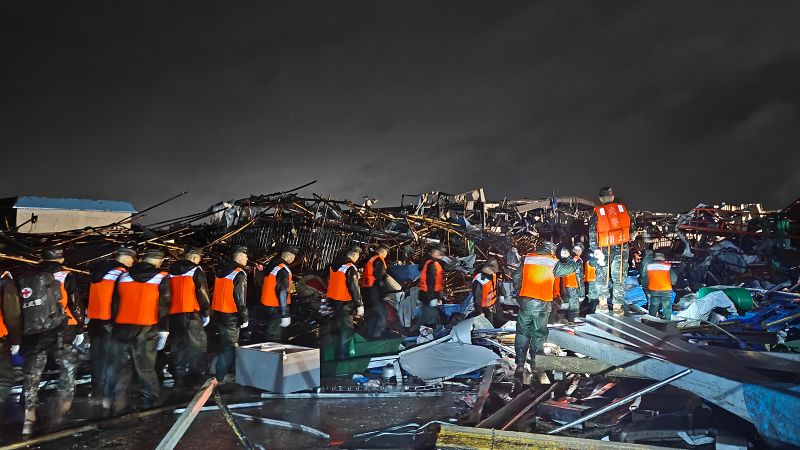
Huanggang city suffered the most intense consequences of the tornado, with one man—identified as a 30-year-old resident—being carried from his high-rise building by the force of the storm. His condition remains critical as he was found in a nearby field, still alive but trapped under debris. In Ezhou, dramatic video footage captured the tornado’s power, showing it uprooting trees, lifting heavy trucks 30 meters into the air, and tearing through infrastructure. Five deaths were confirmed in Ezhou alone, underscoring the storm’s destructive potential. Local officials described the event as one of the worst in recent memory, with widespread chaos reported in the aftermath.
“The sheer magnitude of the destruction is staggering,” said a spokesperson for Huanggang’s emergency management department. “Over 3,000 people are actively involved in rescue and recovery efforts across the region.”
Unprecedented Weather Patterns and Regional Vulnerability
Tornadoes are rare in Hubei province, with the last recorded occurrence dating back to May 2021. Meteorologists attribute the recent storm to the convergence of Typhoon Maysak and the early-summer rainy season, creating unstable atmospheric conditions. This overlap has led to an unusual sequence of extreme weather events, including severe flooding in Guangxi and a deadly landslide in Gansu. The tornado in central China is part of a broader pattern of climate-related disasters that have intensified in recent years, raising concerns about regional preparedness.
Since Sunday, Typhoon Maysak has been responsible for flooding in Guangxi, breaking 24-hour precipitation records in cities like Hengzhou. In one village, the water levels rose so rapidly that it forced the evacuation of over 1,200 residents. The floodwaters also caused a snake farm to overflow, releasing hundreds of reptiles, including venomous cobras, into the surrounding community. This secondary crisis added to the chaos, with locals working to contain the escape of the snakes and ensure public safety.
Rescue Operations and Community Response
Emergency teams have been deployed across the affected regions to search for survivors and assist displaced residents. The man blown from the 12th floor was among the first to be rescued, but the operation has since expanded to include dozens of injured individuals. Volunteers and local residents have played a critical role in the response, using makeshift tools to clear debris and locate trapped people. Social media has been flooded with videos and photos of the destruction, drawing global attention to the scale of the disaster.
Chinese leader Xi Jinping has called for an urgent coordinated effort to support victims and accelerate recovery. The disaster has prompted discussions about the need for improved infrastructure and early warning systems in regions vulnerable to extreme weather. Meanwhile, officials continue to assess the damage, with preliminary reports indicating that the tornado caused millions of yuan in economic losses. The man blown from the 12th floor serves as a haunting reminder of the storm’s power and the risks faced by those in high-rise buildings during such events.
Long-Term Impacts and Climate Change Concerns
As the dust settles, experts are analyzing the tornado’s impact on the region’s resilience. The event has sparked debates about the influence of climate change on weather patterns, with some scientists suggesting that rising temperatures may increase the frequency of such extreme phenomena. The man blown from the 12th floor’s survival remains uncertain, and his case has become a symbol of the tornado’s unpredictability. Meanwhile, agricultural losses are expected to disrupt local economies, with rice and wheat fields left in ruins across several districts.
Authorities have issued warnings to residents in high-risk areas, emphasizing the importance of securing windows and doors during severe storms. The man blown from the 12th floor’s story has been widely shared on news outlets, serving as a poignant example of the human toll of such disasters. As recovery efforts continue, the focus remains on ensuring that no additional lives are lost and that the community rebuilds with greater preparedness for future extreme weather events.