
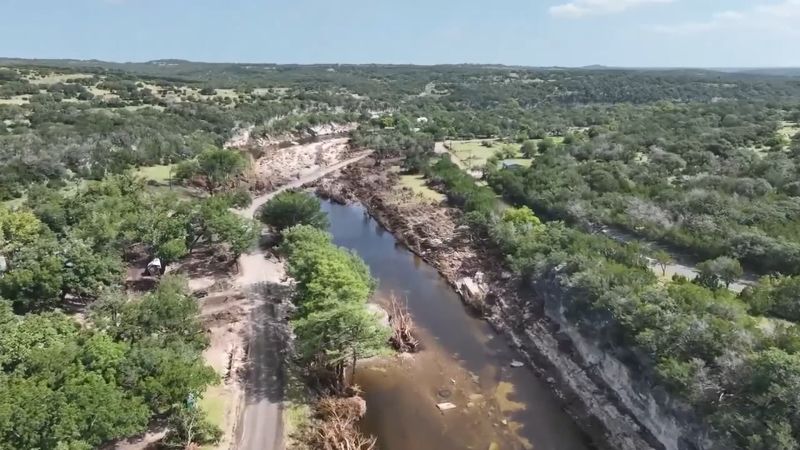
What the Guadalupe River left behind
Qwenews.com – Last summer, the Guadalupe River’s sudden surge through Texas Hill Country claimed lives and left devastation in its wake. Elida Sierra Lutz and her three children were among those swept away by the flood, their bodies carried like debris in the torrent. The water, which had risen from roughly 3 feet to 30 feet in just 45 minutes, came without warning after a summer’s worth of rain fell overnight on parched earth. Though they survived, the family faced the heartbreaking loss of their belongings: their son’s black zippered hoodie, wallet, glasses, and cell phone; their daughter’s Nintendo devices, lifejacket, and white Crocs with handpicked charms; and their entire travel trailer.
A Camp’s Devastating Farewell
About 10 miles away, Heart O’ the Hills—a girl’s summer camp nestled along the Guadalupe River—was also ravaged. Program director Bailey McEachern returned from a break to find the flood had not only taken the lives of the camp’s beloved director and co-owner but also swallowed cherished relics of its history. Cabin signs, 1950s-era sterling-silver necklaces adorned with thunderbird and crossed-arrow motifs, and a prized trophy known as The Cup were among the items lost. Even the crown molding in Director Jane Ragsdale’s office, which spelled out the camp’s Eight Traits like courage and trust, was gone.
“They’re gonna want their things,” she thought, “like I would want my things.”
In the aftermath, survivors grappled with the emotional toll of their personal items scattered across the Central Texas landscape. While many objects were replaceable, they carried sentimental value, symbolizing both loss and resilience. It was then that Dondi Voigt Persyn, a mother of three and grandmother of four from Boerne, Texas—situated on a hill above the Guadalupe River, 35 miles from the disaster zone—stepped forward. With a background in pathology and a passion for perfume-making, she embarked on a mission that would become a defining effort in the community’s recovery.
A Call to Action
Dondi’s initial foray into the cleanup revealed a handful of lost items: mixed-metal necklaces, a child’s photograph, clothing, and a bag of miscellaneous objects. Recognizing the need for organization, she created a Facebook group called FOUND on the Guadalupe River, where survivors could share what they had lost and others could report discoveries. The group quickly became a hub of activity, with posts detailing everything from wallets and textiles to sports equipment and camp trunks. Strangers collaborated in the comments, offering leads and connecting items to their rightful owners.
Within days, the effort began to bear fruit. One of Dondi’s earliest successes came on July 7, when she posted about five necklaces found tangled in debris. By evening, a message arrived: “Oh my goodness those are mine,” wrote Patty Hyatt, a retired schoolteacher. The necklaces had been swept from her trailer as floodwaters tore through her home, taking everything she owned. Patty knew she’d recover them, and her story became a testament to the power of community in reclaiming what was lost.
As the waters receded, so did the despair, replaced by the collective determination to rebuild. The Guadalupe River had stolen more than 136 lives, including dozens of children from other camps, a grandmother, a father, and a coach, but it also sparked a movement to restore what remained. Through Dondi’s initiative and the generosity of strangers, the river’s wreckage began to find its way back to those who had once owned it.