
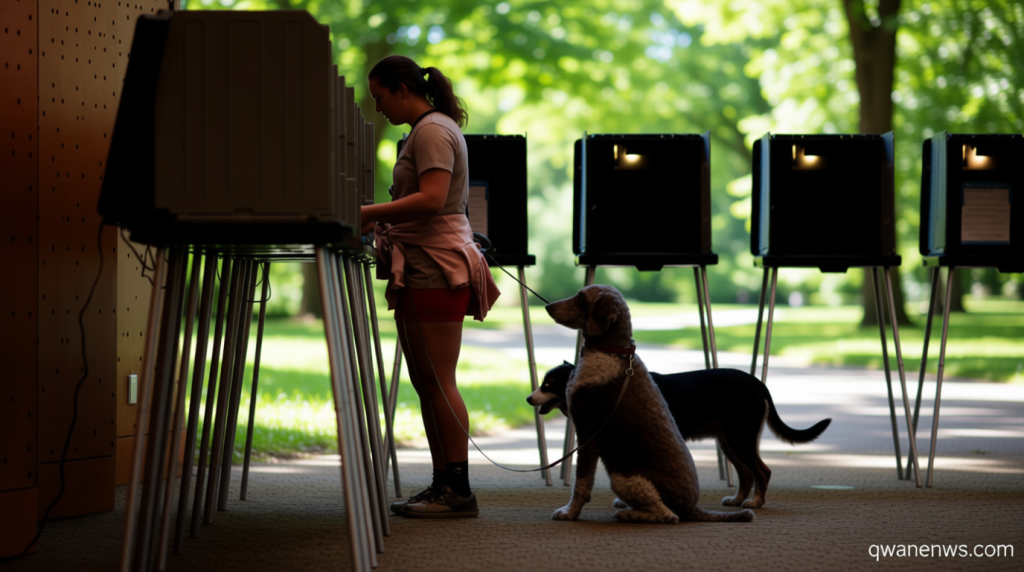
CNN analysis: Midterm primary turnout trends favor Democrats
Democrats Lead in Primary Elections Amid Polarization
Qwenews.com – CNN analysis reveals that primary elections this year are witnessing a clear Democratic advantage in voter turnout, a trend that has persisted throughout the first half of 2026. The data underscores a significant shift compared to previous midterm cycles, with Democrats securing higher numbers of votes in key battleground states. This surge in participation is attributed to the broader political climate and the energized base supporting progressive agendas. Unlike the evenly split popular vote in the 2024 presidential election, the primary elections are reflecting a more pronounced lean toward Democratic candidates, which could have substantial implications for the upcoming midterms.
The CNN analysis draws on data from 20 states that have already held primary elections in the 2026 cycle, comparing turnout figures with those from the 2022 and 2018 midterms. In these states, Democratic primary voters have consistently outpaced Republican counterparts, with a 10-point increase in support since 2022 and a 3-point rise since 2018. This trend highlights a growing enthusiasm among Democratic voters, who are rallying around candidates positioned to address issues like healthcare, climate change, and social equity. Meanwhile, Republican turnout has remained stagnant, raising questions about the party’s ability to mobilize its base effectively.
Factors Driving Democratic Turnout
Several factors are contributing to the Democratic lead in primary elections. The return of Donald Trump to the presidency has galvanized a portion of the electorate, but it has also sparked skepticism toward both major parties, particularly among independents and younger voters. According to the CNN analysis, this skepticism has not diminished Democratic participation, as voters remain committed to their preferred candidates. Additionally, the expansion of early voting and mail-in ballots in many states has provided more opportunities for Democratic voters to cast their ballots, further amplifying their numbers.
Another key driver is the Democratic Party’s focus on grassroots engagement and targeted outreach. Campaigns have emphasized issues that resonate strongly with working-class and minority communities, encouraging these groups to participate in primaries. In contrast, Republican efforts have been more fragmented, with candidates often competing for a smaller, more polarized base. The CNN analysis also points to demographic shifts, as younger voters and urban populations continue to favor Democratic candidates, creating a more diverse and dynamic electorate.
Primary Turnout vs. General Election Dynamics
While the primary turnout trends are encouraging for Democrats, the CNN analysis cautions that these results may not fully translate to general election success. Primaries tend to attract more dedicated party members, who are often more ideologically aligned and eager to support candidates. However, the broader electorate in November may be influenced by different factors, such as economic concerns or voter fatigue. The analysis highlights the importance of monitoring how these primary trends evolve as the midterms approach, particularly in states where the balance of power could shift.
Despite these challenges, the CNN analysis emphasizes that the current momentum is a strong indicator of Democratic strength. In 18 of the 20 states analyzed, Democratic turnout has consistently outperformed Republican participation, a pattern that has not been seen in recent cycles. This consistency suggests a more unified and motivated voter base, which could bode well for the party’s chances in November. However, the analysis also notes that the polarization of the political landscape remains a critical factor in shaping these outcomes.
State-Level Variations and Key Examples
The CNN analysis further breaks down the data by state, revealing variations in turnout patterns. In Texas, for instance, the Democratic primary saw a record-breaking surge, with early voting contributing to the party’s strong showing. Similarly, in states like California and New York, Democratic candidates have consistently drawn larger crowds, reflecting the party’s stronghold in urban and diverse regions. These examples illustrate how local dynamics and voter priorities can influence the broader trend, even within a polarized national context.
Yet, not all states are experiencing the same level of Democratic dominance. In some Midwest and Southern states, Republican turnout has remained competitive, though it has not matched the surge seen in Democratic primaries. The CNN analysis suggests that these regional differences could create opportunities for Republicans to regain ground in specific districts or states. However, the overall pattern remains favorable to Democrats, with their primary performance indicating a potential advantage in the general election.
Implications for the Midterm Elections
As the midterms draw closer, the CNN analysis highlights the significance of these early turnout trends. The data suggests that Democratic candidates may benefit from a more engaged electorate, particularly in races for the House and Senate. However, the analysis also warns that the party must maintain this momentum through the general election, where the broader electorate could tip the scales. The challenge for Democrats lies in translating primary enthusiasm into November votes, a task that will require effective messaging and broad-based appeal.