
Trump’s Freedom 250 gives the founders an AI glow-up
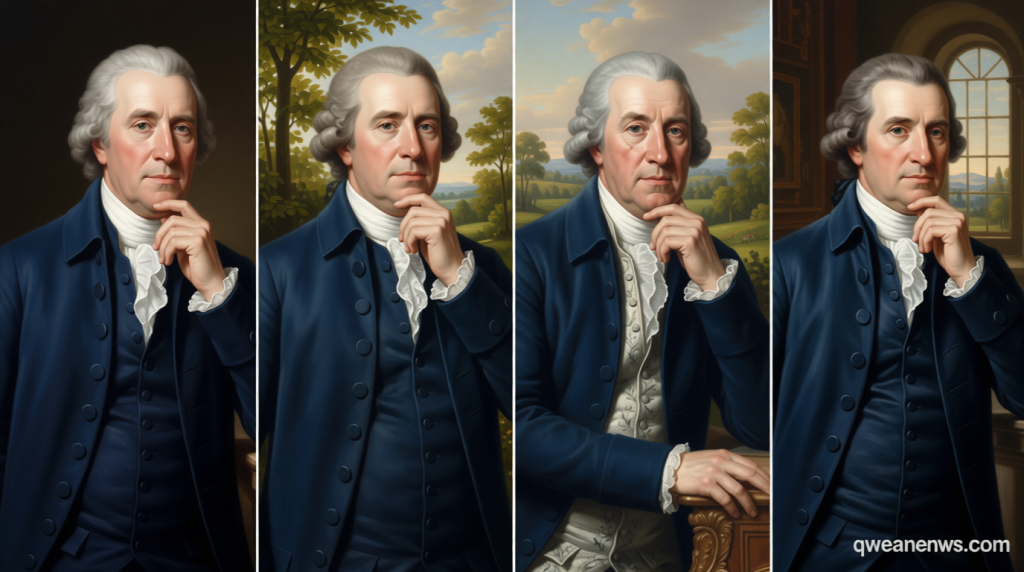
Qwenews.com – The Freedom 250 initiative, spearheaded by a nonprofit organization under the Trump administration, has launched a digital gallery featuring reimagined portraits of the Founding Fathers. These images, crafted using Google’s generative AI, offer a modern twist on historical figures, blending accuracy with a sleek, contemporary aesthetic. Dr. Benjamin Rush, a physician and academic among the original signers of the Declaration of Independence, is one example. His portrait in the gallery shows a smooth, porcelain-like complexion, radiant eyes, and a confident, slightly enigmatic expression, far removed from the more austere depictions of his time.
Historical portraits of Rush, such as the 1812 piece by Thomas Sully, portrayed him with flat hair and sharp, pinched features. In contrast, the AI-generated version presents a more polished appearance, with glossy locks and a composed posture. This shift creates an unsettling sense of familiarity, as if Rush has been transformed into a figure from a different era. The digital watermark on the image confirms its artificial origin, raising questions about the intent behind these updates.
Conformity in style and pose
Many of the portraits in the gallery exhibit a striking uniformity, often mirroring the iconic likeness of George Washington by Gilbert Stuart. This trend extends to the clothing, physiognomy, and poses of the figures, suggesting a deliberate effort to standardize their visual representation. For instance, the AI-generated Abigail Adams appears with a taut face, oversized eyes, and an unnaturally luminous skin tone—traits absent from her 1766 pastel portrait by Benjamin Blyth, which captured her as a 21-year-old with almond-shaped features and a slightly hooked nose.
“The Freedom 250 versions of the founders stand in front of neoclassical columns and banisters, decorative features favored by the current Trump administration but not common in Revolutionary-era portraiture,” noted Zara Anishanslin, a University of Delaware historian and author of “The Painter’s Fire: A Forgotten History of the Artists Who Championed the American Revolution.”
Additionally, the gallery’s “Ladies of the Revolution” section has drawn criticism for its anachronistic choices. While some figures like Dolley Madison are depicted as adults, her portrait in the digital collection shows her in a style more fitting for a 21st-century aesthetic. The AI-generated versions often feature near-identical clothing and poses, casting doubt on their historical authenticity. Anishanslin pointed out that these images reflect a corporate vision of American history, prioritizing consistency over the individuality of the original figures.
For example, the AI’s interpretation of Benjamin Franklin’s attire replaces his traditional gray coat with a blue one, altering the garment’s symbolism. This choice aligns more with 19th-century fashion than the 18th century, subtly reshaping how the Founding Fathers are perceived. The project’s emphasis on modernity has sparked debate among historians, who argue that the updated portraits risk erasing the unique characteristics of the past in favor of a streamlined, idealized image.