
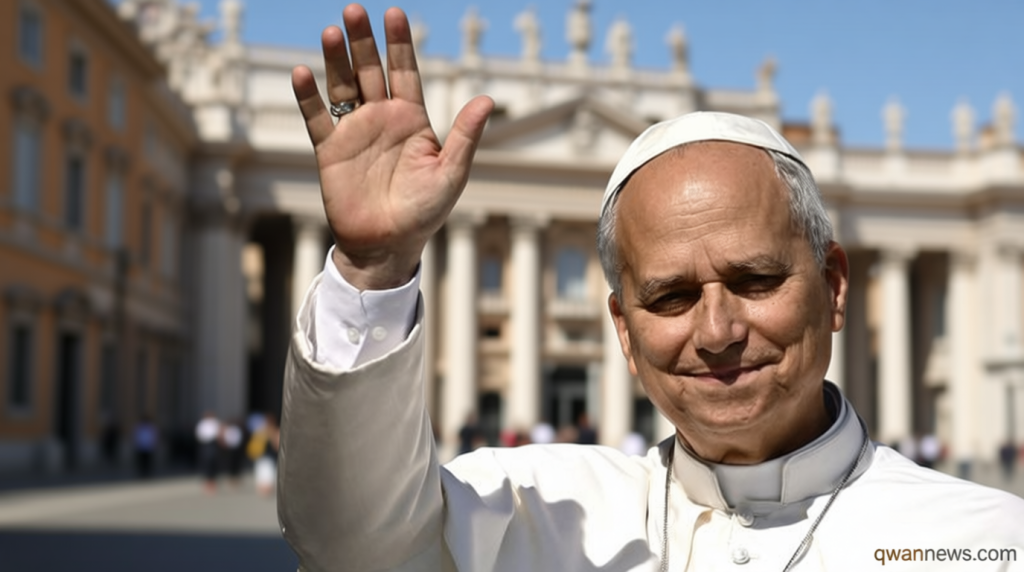
On the Eve of America’s Birthday, First American Pope Takes Center Stage
Qwenews.com – On the eve of America’s birthday, Pope Leo XIV stood at the heart of Philadelphia’s historic downtown, where the nation’s founding ideals were once debated. The pontiff’s presence on Independence Day Eve marked a significant moment for the city and its citizens, who gathered to honor his legacy as the first U.S.-born pope. Reverend Paul Galetto, pastor of St. Paul Parish in South Philly, noted a growing public enthusiasm for the pontiff, who has become a symbol of relatability and shared values. “The people love having someone who better relates to them and understands their struggles,” Galetto said, emphasizing the pope’s ability to bridge cultural and religious divides. This recognition came as the nation celebrated its 250th anniversary, with the event serving as a powerful reminder of the enduring connection between American identity and global faith.
Pope Accepts Liberty Medal at National Constitution Center
The ceremony took place just under two miles from Galetto’s church, at the National Constitution Center, a non-partisan organization dedicated to promoting constitutional education. The venue’s location, adjacent to Independence Hall, underscored the historical significance of the gathering. “It made sense to connect a Philadelphia story, an American story, and a global story,” said Vince Stango, interim CEO of the center. “And who better to embody those connections than the first U.S.-born pope?” The Liberty Medal, a prestigious honor given to individuals and groups that champion liberty worldwide, was presented to the pontiff during a ceremony that drew a diverse audience. The medal’s history includes recipients like Ukrainian President Volodymyr Zelensky and late Senator John McCain, yet this selection highlighted Pope Leo XIV’s unique role in representing the intersection of faith and national values.
During his acceptance speech, Pope Leo XIV projected his remarks onto a massive screen, addressing themes that resonated deeply with the American spirit. He urged unity, calling for “respect for the views of others” and “an ongoing effort to find common ground in promoting peace and reconciliation.” His words also celebrated America’s tradition of immigration, noting how the country has “opened its doors to successive waves of newcomers, enabling them to shape its future.” The speech emphasized the foundational principles of liberty and freedom, reinforcing their relevance in contemporary society. “We hold these truths to be self-evident that all men have received fundamental rights from our creator,” the pope recited, a line that echoed the Declaration of Independence and captured the nation’s core ideals.
“They include life, liberty, and the pursuit of happiness.”
The Liberty Medal event was not only a tribute to Pope Leo XIV’s role as a spiritual leader but also a celebration of America’s commitment to values that transcend political boundaries. While the medal is non-partisan, its selection of the pope sparked discussions about his relationship with former President Donald Trump, who had been a vocal critic during the early years of his papacy. Despite these differences, the ceremony underscored a shared respect for the principles of liberty and freedom, which the pope has consistently championed. As the nation marked its 250th anniversary, the event offered a rare opportunity to reflect on how these values continue to inspire both national and international discourse.
A Legacy of Unity and American Values
Pope Leo XIV’s selection for the Liberty Medal was based on his “lifelong advocacy of religious freedom and the protection of conscience and expression,” as stated by the National Constitution Center. His message aligned closely with the Founding Fathers’ vision of a nation built on liberty and equality, making him a fitting recipient of the honor. The pontiff also highlighted the importance of Christian values in shaping laws that safeguard human dignity, from conception to natural death. “May God bless America,” he concluded, a sentiment that resonated with attendees and symbolized the enduring partnership between the Vatican and the United States.
Michael Moreland, a Villanova University professor of law and religion, described the pope as a “conciliatory figure” who has navigated complex political landscapes with grace. “Despite some controversies, he remains a unifying symbol for American Catholics and a source of pride for all Americans at a time of national discord,” Moreland noted. Galetto, who has known the pope for years, praised his ability to connect with people across borders and his message of hope. “He brings a sense of familiarity to the global stage, reminding us of the shared values that bind us,” the pastor added. The event’s symbolism extended beyond the immediate celebration, serving as a reminder of the enduring influence of American ideals on the world stage.
As the sun set over Philadelphia, the gathering highlighted a broader cultural movement that celebrates the intersection of faith and national identity. The National Constitution Center’s decision to honor Pope Leo XIV on this particular date was intentional, drawing attention to how the pontiff’s leadership reflects the nation’s founding principles. “The Founding Fathers declared independence in Philadelphia 250 years ago, and today, the pope’s message aligns with their vision of liberty,” Stango said, reinforcing the historical connection. This rare convergence of local, national, and global narratives positioned the event as a pivotal moment in the ongoing dialogue about America’s role in promoting freedom and justice around the world.