
Tricorn Hats or Trump Rally? Americans Have July Fourth Options
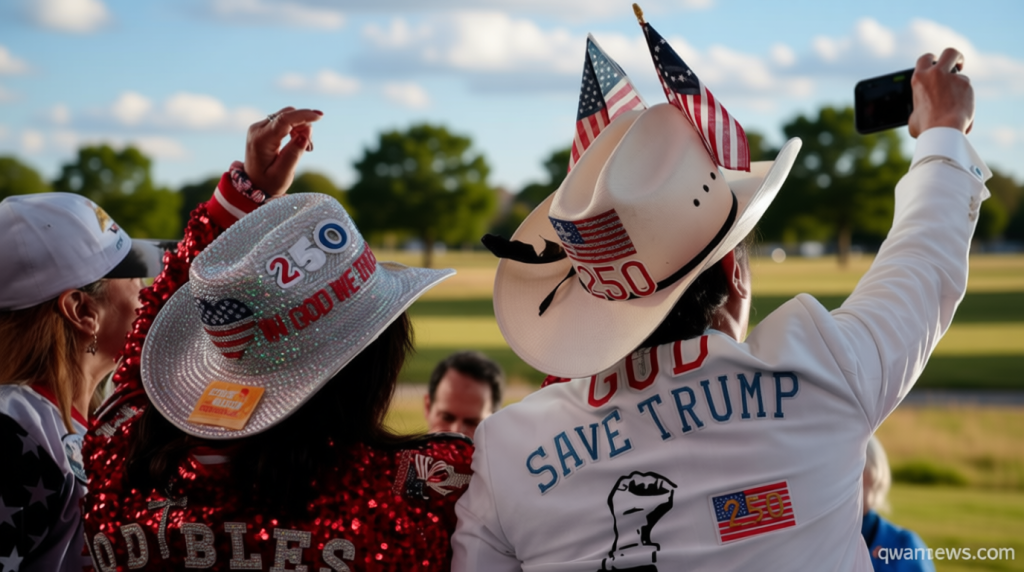
Qwenews.com – As the United States celebrates the 250th anniversary of the Declaration of Independence, citizens are faced with a choice: participate in traditional patriotic events or attend a Trump rally on the National Mall. The juxtaposition of these two options highlights the deepening divide in how Americans interpret the nation’s founding ideals. While many opt for parades, fireworks, and historical reenactments, others are drawn to the political spectacle that has become a hallmark of Trump’s public appearances. This year’s July Fourth festivities, however, have sparked debates over the role of politics in shaping national celebrations.
A National Mall That Splits the Country
The National Mall, a historic symbol of American unity, has become a battleground for ideological differences. Originally designed to showcase the nation’s democratic heritage, the space now hosts events that reflect a polarized public. Trump’s rally, themed around “THE LARGEST FIREWORKS SHOW IN HISTORY,” aims to blend entertainment with political messaging. The event, organized by his affiliated group Freedom 250, features military bands, patriotic displays, and a curated playlist, including his favorite song, “YMCA” by the Village People. Yet, despite the grandeur, attendance has remained inconsistent, raising questions about its appeal to a broader audience.
Supreme Court justices recently demonstrated the ideological divide over the Declaration of Independence, as they split on whether the Constitution guarantees citizenship to all people born in the U.S. The majority affirmed this right, underscoring the tension between traditional interpretations and modern political discourse.
This ruling echoes the broader debate over the meaning of American identity, which Trump has sought to redefine. His rally, held in a public space with historical significance, positions him as a central figure in reimagining the nation’s founding narrative. While some see this as a bold attempt to align the past with his vision of the future, others argue it risks overshadowing the cultural and historical traditions that have long defined July Fourth celebrations.
Freedom 250’s monthlong event, known as the Great American State Fair, has been criticized for its narrow scope. With only 49 states participating, the initiative lacks the nationwide reach of previous bicentennial commemorations. Logistical challenges, such as limited parking and weather-related disruptions, have further complicated the experience. Comparisons to the 1976 bicentennial, which drew 1 million attendees and featured Gerald Ford’s speeches at Independence Hall, highlight the contrast in public engagement. Back then, the celebration was a collective effort, uniting communities through shared historical pride. Today, Trump’s version emphasizes partisan alignment over communal participation.
Politicizing the Past
Trump’s approach to the 250th anniversary reflects a growing trend of rebranding national milestones to suit his political agenda. The original bipartisan organization America 250, created by Congress a decade ago, had planned a diverse array of events to honor the Declaration of Independence. Trump, however, opted to take control, forming a separate public-private entity. This decision has drawn criticism from historians and civic leaders, who argue that the politicization of history risks distorting its legacy. For instance, the inclusion of a Confederate flag display at one of the event’s venues has sparked controversy, with some viewing it as a nod to historical slavery, while others see it as a tribute to Southern heritage.
While Trump’s rally has attracted a dedicated following, it has also drawn skepticism. Some analysts note that the event’s attendance figures fall short of the 1976 bicentennial, which featured a more widespread public turnout. The Great American State Fair, meanwhile, has been lauded for its emphasis on economic development and state pride, but its political undertones have led to debates about whether it truly represents the spirit of the nation’s founding. Critics argue that the event’s focus on Trump’s policies and persona overshadows the historical significance of the date, while supporters claim it brings a fresh, energetic perspective to the celebration.
Notably, the absence of PBS from the National Mall fireworks display has drawn attention to the growing ideological rift. As a public broadcaster with a long history of hosting civic events, PBS’s decision not to participate signals a shift in media alignment. This omission has led to discussions about the role of independent media in shaping public memory, with some suggesting that Trump’s rallies have become a more dominant cultural force. Despite these challenges, the event continues to draw crowds, offering a unique blend of political rhetoric and patriotic symbolism that resonates with his base.