
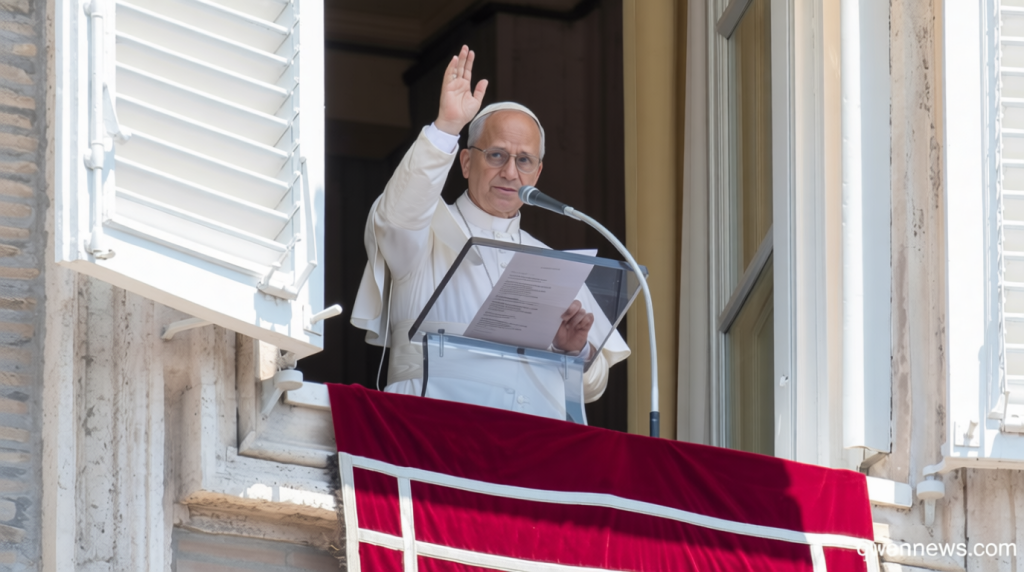
Pope Leo XIV Confronts Breakaway Catholic Group
Qwenews.com – Just over a year into his papacy, Pope Leo XIV has issued a final plea to the Society of Saint Pius X (SSPX), a traditionalist faction of Catholics, urging them to abandon plans to consecrate bishops without his approval. The group, which has long resisted modern reforms within the Church, is set to proceed with the ordination of four bishops at its Écône seminary in Switzerland. The pope warns that their actions would constitute a “schismatic” act, potentially leading to the excommunication of the new bishops.
A Test of Church Unity
In an 11th-hour letter, Leo XIV appeals to the SSPX, stating, “I plead with you and ask you with all my heart: please turn back!” He emphasizes that their defiance threatens the Church’s unity, which relies on the spiritual connection between bishops and the pope. “To tear the seamless garment of Christ is a sin of extreme gravity,” he writes, hoping to enlighten the group’s members and awaken their commitment to the faith.
“I pray for you, because to tear the seamless garment of Christ is a sin of extreme gravity. May the Lord enlighten your consciences and awaken your hearts.”
Origins and Ideology of the SSPX
The SSPX traces its roots to 1970, when Archbishop Marcel Lefebvre founded it in Switzerland. The group rejects key changes introduced by the Second Vatican Council, including the use of vernacular languages in Mass and updated teachings on religious freedom and ecumenism. Despite being officially suppressed by the Bishop of Fribourg in 1975, the SSPX has persisted, maintaining a presence in the U.S. with headquarters in Missouri and a seminary in Dillwyn, Virginia.
Excommunication and Reconciliation Efforts
Historically, the SSPX’s refusal to follow papal directives has resulted in excommunications. In 1988, they ordained four bishops without approval, prompting the Vatican to declare them outside the Church’s sacramental life. Pope Benedict XVI later reversed this decision in 2009, but one bishop, Richard Williamson, faced scrutiny for falsely asserting that Nazis did not use gas chambers during the Holocaust. He was eventually expelled from the group after being convicted in a German court.
Preparations and the Pope’s Stance
Despite Leo XIV’s appeals, the SSPX is advancing with its preparations. A website has been launched to outline four days of events surrounding the ordinations, including a 75 Swiss Franc souvenir box containing four bottles of wine. The pope, while open to dialogue, acknowledges the limits of negotiation. “If they make that choice, I am sorry, but we must move forward,” he said during remarks on June 16.
Cardinal Blase Cupich, a trusted ally of Leo XIV, highlighted the significance of the crisis. “The danger lies in establishing a parallel structure within the ecclesial body of the Church,” he explained. “They misuse the rites of the church when it comes to consecrating bishops, and Leo is very serious about this issue.”
Broader Implications
Though the SSPX’s global reach is modest—approximately 700 priests and 600,000 followers—their potential schism is viewed as a major threat to the Church’s cohesion. With the Vatican’s 1.4 billion members and 400,000 priests, the group’s rejection of modern practices underscores a deep divide over the direction of Catholic tradition. Leo XIV’s focus on unity remains central to his papacy, even as he confronts this latest challenge from the Lefebvrists, who argue the Church is in a “state of emergency” due to liberal influences.