
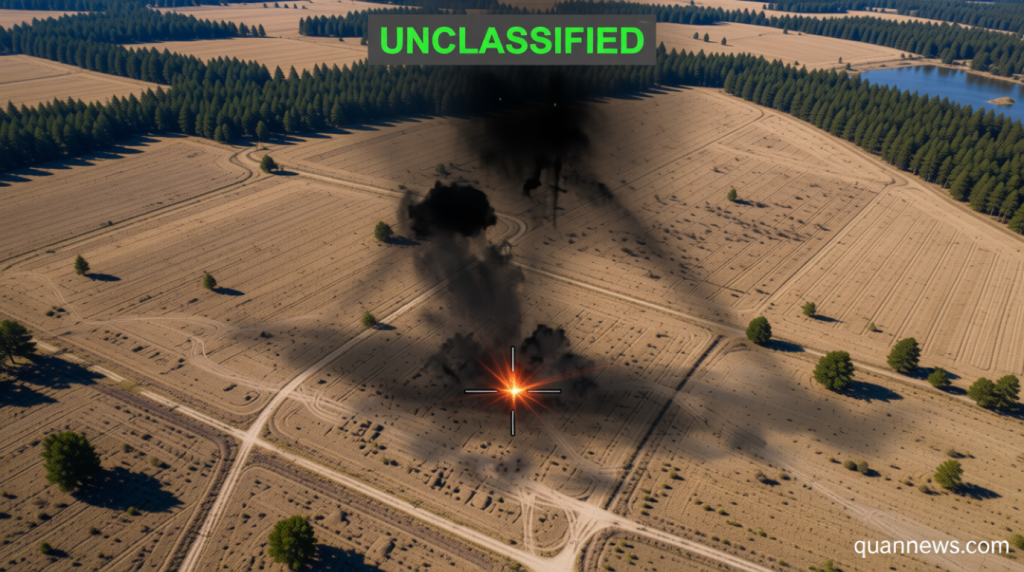
The New US-Iran Clashes Have Revealed the Fragility of the Ceasefire
Qwenews.com – The new US-Iran clashes have revealed the fragility of the ceasefire, exposing underlying tensions that threaten to undermine a fragile agreement. Recent hostilities around the Strait of Hormuz and the Persian Gulf highlighted the precarious balance between the two nations, which had been maintaining a temporary truce to prevent further escalation. This cease-fire, announced after weeks of confrontations, was intended as a stepping stone toward a permanent resolution, yet the ongoing skirmishes underscored its vulnerability. Analysts note that the clash between the US and Iran not only tested the agreement’s durability but also revealed the strategic stakes involved in controlling the region’s vital waterway.
The Truce’s Fragility and Its Context
The ceasefire, which emerged following a series of aggressive actions by Iran and retaliatory strikes by the US, was hailed as a critical achievement in diplomacy. However, the new US-Iran clashes revealed that the agreement was built on mutual concessions rather than long-term stability. Iran’s missile strikes on US and Gulf allies, coupled with the US’s military responses, demonstrated how quickly the truce could be breached. While both sides agreed to “stand down for now,” the terms remained ambiguous, leaving room for interpretation and provocation. This fragility has raised concerns among international observers, who fear the agreement may not hold beyond the initial phase.
Strategic Implications of the Ceasefire
Analysts suggest that the new US-Iran clashes revealed deeper strategic motivations. For Iran, the conflict was not just about military posturing but also about asserting control over the Strait of Hormuz, a critical artery for global oil shipments. By targeting merchant vessels and US bases, Iran aimed to disrupt Western dominance in the region and signal its ability to challenge American interests. In contrast, the US sought to protect its allies and ensure uninterrupted maritime trade, which is vital for stabilizing global energy markets. The tension between these goals has made the ceasefire a precarious agreement, with both sides wary of the other’s intentions.
“If Iran continues violating the ceasefire, it will no longer exist,” Trump warned on Sunday.
Despite the initial optimism, the new US-Iran clashes revealed the challenges of sustaining peace. The Trump administration’s decision to hold off on further escalation was seen as a calculated move to preserve its diplomatic gains. However, the agreement’s terms remained contested, particularly regarding Iran’s nuclear program and its right to influence maritime traffic. The ceasefire also highlighted the economic pressures driving the conflict, as Iran sought to maintain its oil exports while the US aimed to reduce its strategic dependence on the region. These factors have made the truce a temporary solution rather than a permanent resolution.
The recent clashes have had tangible effects on global markets, with oil prices fluctuating in response to the uncertainty. While the ceasefire allowed for increased maritime traffic through the Strait of Hormuz, the potential for renewed conflict kept investors on edge. Average US gasoline prices fell to $3.87 a gallon on Sunday, easing concerns about rising fuel costs, but the long-term impact of the truce remains unclear. For Trump, the new US-Iran clashes revealed the importance of the agreement in maintaining his political standing ahead of the midterm elections. Yet, the fragile nature of the truce has left many questioning whether it can withstand future provocations.
As the US and Iran navigate the aftermath of the new clashes, the focus remains on securing a lasting peace. The agreement’s success will depend on both sides’ willingness to compromise, particularly on issues like sanctions and regional alliances. While the truce has prevented full-scale war, it has also exposed the deep divisions between the two nations. The new US-Iran clashes revealed that the path to resolution is complex, requiring careful diplomacy and strategic patience. Whether this fragile ceasefire can hold or if it will give way to renewed hostilities remains a key question for global policymakers.