
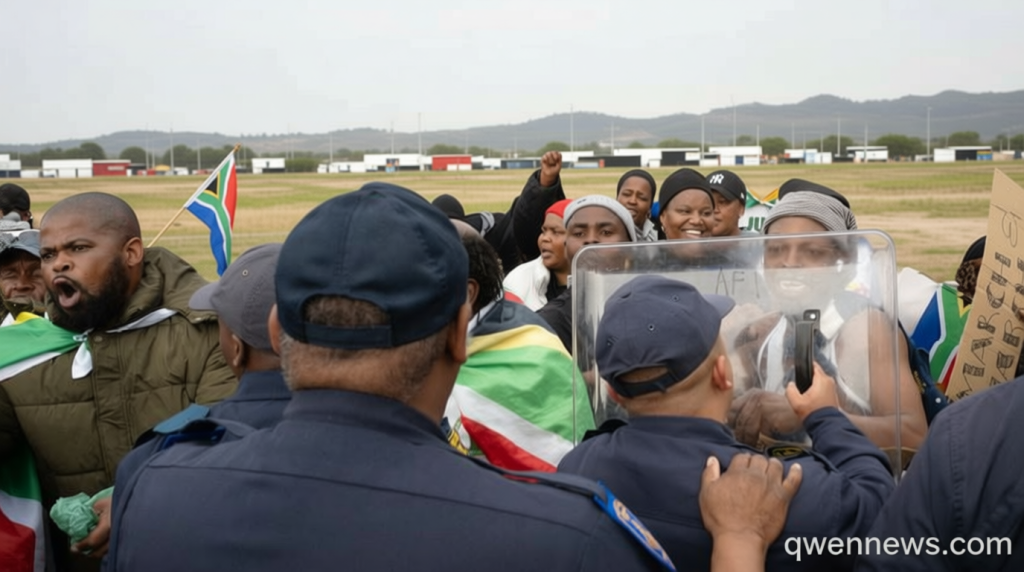
South Africa’s Migrant Deadline: ‘Leave or Return in a Coffin’
Qwenews.com – South Africa is facing mounting pressure as anti-migrant groups intensify their call for foreign nationals to leave the country or risk death. The phrase “Leave or return in a coffin” has become a chilling rallying cry, echoing through communities and amplifying fears of violence. Kaunga Nyirenda, a Malawian gardener in Johannesburg, recounted being given this ultimatum by two men early in June: “They asked me: ‘When are you going to leave the country? We want to fix our country. If you don’t leave now, you’re going to leave in a coffin because we don’t need anyone after the 30th of June.’” Nyirenda’s story highlights the growing anxiety among migrants, who now live under constant threat of being attacked or forcibly expelled.
Anti-Migrant Sentiment and Government Response
South Africa’s government has remained defiant against the escalating rhetoric, with President Cyril Ramaphosa vowing to protect citizens from xenophobic violence. “We will not tolerate any attempts to destabilize the country by anyone, whether marching or otherwise,” he declared. The president emphasized that the government’s policies aim to support integration, not drive out migrants. However, as tensions rise, security forces have been deployed in key areas to monitor and respond to potential clashes.
“Opportunists are exploiting legitimate grievances, particularly those of the poor, under the false guise of ‘community activism,’” Ramaphosa added in a recent address. His comments aim to counter claims that the anti-migrant movement is a coordinated effort to push foreigners out, but the phrase “Leave or return in a coffin” has already taken root in public discourse, fueling both fear and determination among migrants.
Organizations like Operation Dudula, known for their aggressive stance on expelling undocumented migrants, have gained significant traction. Their members often appear in traditional Zulu warrior attire, reinforcing a sense of urgency. The group’s leader, Nkosikhona Ndabandaba, known as “Phakel’umthakathi,” has used social media platforms to amplify the message, claiming a massive following on Facebook that translates to widespread influence. As the June 30 deadline approaches, the pressure on migrants intensifies, with some fearing the worst.
The Impact on Migrants and Communities
With the threat of violence looming, hundreds of migrants have taken refuge in churches, mosques, and community centers. These safe spaces have become crucial for those seeking protection, yet the exodus continues. According to reports, over 13,000 foreign nationals have been repatriated or deported in recent weeks, with Malawians and Zimbabweans comprising the largest groups. The National Department of Home Affairs has reported a surge in applications for voluntary departure, signaling a deepening crisis.
“June 30 is the deadline, but you don’t have to wait until then—leave now,” Ndabandaba stated in a video, adding that after Tuesday, “I can’t control the people of South Africa.” His declaration has been met with both support and skepticism, as some migrants see it as a call to action while others view it as a political ploy to justify expulsions. The phrase “Leave or return in a coffin” has entered everyday conversations, symbolizing the stakes for those caught in the crosshairs of the movement.
While the government maintains that it is not endorsing the violence, the atmosphere of fear has been exacerbated by media coverage and social media campaigns. Anti-migrant groups argue that foreign nationals are taking jobs