
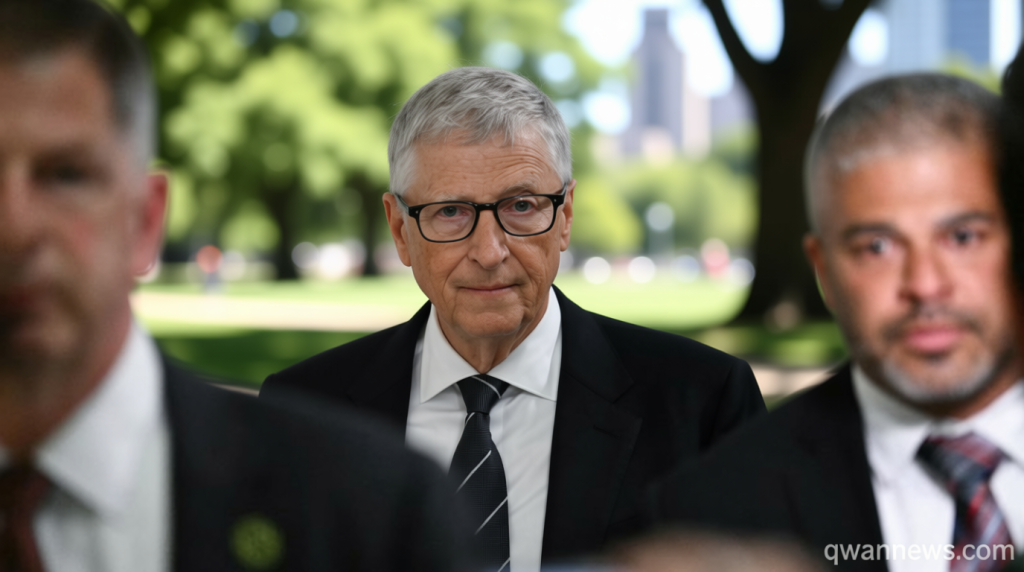
Bill Gates: No Crimes Witnessed, But Possibly Near Epstein Victims
Qwenews.com – In a recent deposition, Microsoft co-founder Bill Gates clarified his role in the Jeffrey Epstein case, stating he didn’t witness any crimes but may have been in the presence of Epstein’s victims. The testimony, released as part of the House Oversight Committee’s investigation, underscores Gates’ assertion that his relationship with Epstein was strictly professional. Despite acknowledging potential proximity to victims, Gates maintained that he had no knowledge of or involvement in the sexual misconduct allegations against the financier.
Deposition Context and Epstein’s Network
The House Oversight Committee called Gates for his deposition following new documents from the Justice Department that hinted at deeper connections between Epstein and prominent figures. In his testimony, Gates described how his three-year collaboration with Epstein was centered around global health initiatives, emphasizing that he never personally met any of the alleged victims. However, he admitted that he might have encountered them during meetings on Epstein’s private jet, highlighting the complexity of his interactions within the network.
“I may have been in the presence of victims,” Gates stated, noting that he saw some of Epstein’s female employees at the end of a meeting on one of Epstein’s planes. He added, “I didn’t witness crimes, but the opportunity for that existed.”
Epstein’s Influence and Gates’ Defense
Gates testified that Epstein used his personal life to exert influence over him, particularly after they began working together in 2011 through Dr. Boris Nikolic. He recounted an incident where Epstein emailed him about expenses related to a woman he had an affair with, suggesting a possible financial motive. Gates claimed he informed his key person, Larry Cohen, that they would never reimburse Epstein for such costs, reinforcing his stance that the relationship was purely business.
Epstein’s assistant, Lesley Groff, also testified, describing the financier as a “master manipulator.” She admitted she had no knowledge of Epstein’s crimes when she connected him with former President Donald Trump over a decade earlier. Groff’s statements, paired with Gates’, provide a layered view of Epstein’s ability to obscure his activities while maintaining professional ties with high-profile individuals.
Uncertainties in Gates’ Testimony
Gates’ testimony introduced several uncertainties regarding his involvement with Epstein’s network. He mentioned that Epstein had suggested he might have concealed a sexually transmitted infection from his wife, though Gates disputed this, stating he had no evidence of such an act. The billionaire also acknowledged that Epstein’s draft emails in 2013 contained graphic allegations, some of which were unverified, and claimed they were used to pressure him into maintaining a relationship.
“Epstein took every potential negative thing he knew, and some that are completely false, and put them into draft emails,” Gates explained. This strategy, he argued, was designed to manipulate his perception of the situation. Despite this, Gates expressed regret for not fully considering Epstein’s criminal history when entering the partnership, which he believed offered significant philanthropic opportunities.
Implications of the Deposition
The release of Gates’ deposition has sparked renewed interest in the Epstein case, as it highlights potential gaps in his awareness of the financier’s activities. While Gates insists his interactions were professional, investigators have raised questions about the extent of his knowledge. The testimony adds to the ongoing scrutiny of Epstein’s network, which included connections to politicians, celebrities, and wealthy donors. Gates’ statements, though defensive, provide a critical perspective on the relationships that helped Epstein operate in secrecy for years.
Experts note that Gates’ testimony could influence public perception of the case. By emphasizing his lack of direct involvement in crimes, he positions himself as a cautious collaborator rather than a complicit figure. However, the possibility of being in the presence of victims, as he admitted, leaves room for further investigation into how Epstein’s operations might have impacted others. The deposition, therefore, serves as both a defense and an acknowledgment of the broader implications of Epstein’s influence.
Public Reaction and Legal Considerations
The public reaction to Gates’ deposition has been mixed. Some view his testimony as a necessary clarification, while others question whether he fully understood the risks of his association with Epstein. Legal analysts suggest that the testimony may not resolve all allegations but could shape the narrative around Gates’ role in the case. The House Oversight Committee continues to explore how Epstein’s network functioned, with Gates’ statements providing a key piece of the puzzle.
As the investigation unfolds, the focus remains on how Epstein’s connections facilitated his activities. Gates’ deposition, while not definitive, adds depth to the inquiry by revealing his awareness of Epstein’s reputation and his own doubts about the relationship. The full implications of his testimony will depend on further evidence and the context in which his interactions with Epstein occurred.