
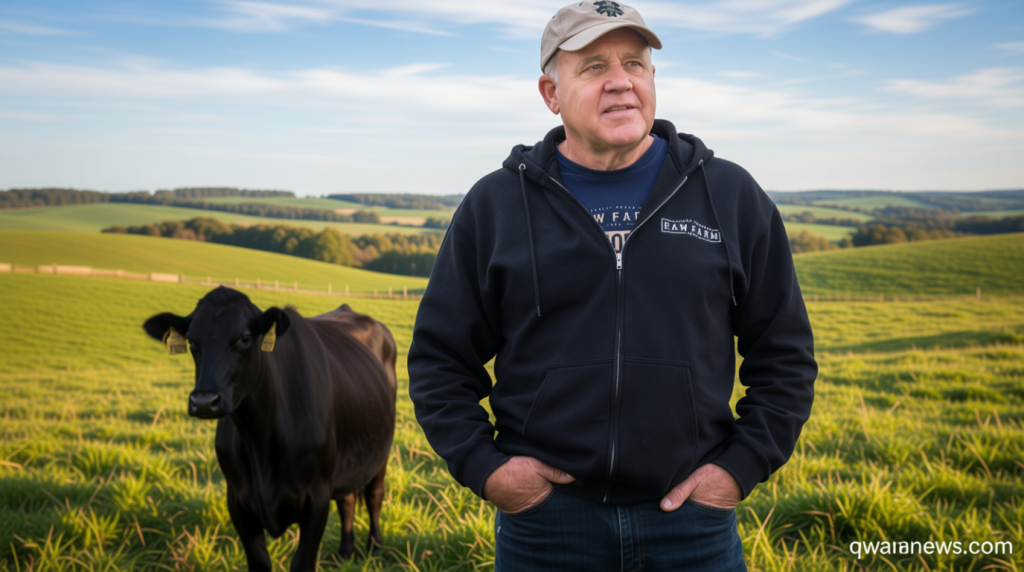
He Profits Off Raw Milk Despite Health Risks
Qwenews.com – Mark McAfee, a 64-year-old dairy farmer, operates a business that profits off raw milk, a product linked to numerous illnesses and outbreaks. His operation, Raw Farm, is one of the nation’s largest producers of unpasteurized milk, generating an estimated $30 million annually. While his customers embrace raw milk as a healthier, more natural alternative, critics argue that the product poses significant health threats. Despite these concerns, McAfee continues to thrive, with his brand gaining popularity in an era of growing skepticism toward industrial food systems.
Raw Milk Advocates Promote Claims of Health Benefits
Raw milk supporters often cite potential health benefits, such as improved digestion, enhanced immunity, and increased nutrient absorption. These claims have fueled a surge in demand, with over 10 million Americans consuming raw milk weekly. Yet, scientific research spanning more than 150 years suggests that raw milk offers little nutritional advantage over pasteurized milk. The absence of heat treatment to eliminate harmful bacteria like salmonella and E. coli remains a critical risk, particularly for vulnerable populations such as children and the elderly.
“I’ve put a couple kids in the hospital, and they have been sick, but they recovered,” McAfee admitted during our conversation. “Here’s the thing: I’m a pioneer. I’m climbing a mountain they say you can’t climb.”
His remarks highlight a central contradiction in the raw milk industry: while the product is associated with preventable illnesses, its advocates insist it’s a natural solution to modern health issues. McAfee’s farm, which screens milk rigorously for contaminants, is emblematic of this belief. Despite repeated outbreaks, the government has not imposed strict regulations on his operations, allowing the profits to flow despite the risks.
A Political Shield for Raw Milk Production
The federal government’s leniency toward raw milk has been influenced by political shifts. During the Trump administration, regulatory oversight of the dairy industry was relaxed, enabling producers like McAfee to operate with fewer restrictions. This policy change aligned with broader efforts to support small-scale farming and consumer choice. Robert F. Kennedy Jr., a prominent figure in the raw milk movement, championed the product as part of his campaign to challenge mainstream health institutions. His endorsement, alongside other political allies, has helped shield raw milk producers from stricter penalties, despite their history of recalls and health incidents.
McAfee’s success is not only a result of consumer demand but also of a regulatory environment that prioritizes industry growth over public health. While the FDA has long warned about the dangers of raw milk, its enforcement has been inconsistent. Recent data shows that the raw milk industry has grown significantly, with national sales increasing by 65% from 2023 to 2024. This growth has been further accelerated by the bird flu outbreak in his supply chain, which has not deterred consumers from continuing to buy the product.
Health Risks and the Debate Over Regulation
Raw milk’s health risks are well-documented. Outbreaks linked to unpasteurized milk have led to hundreds of hospitalizations and even deaths, particularly among infants and immunocompromised individuals. Despite these incidents, McAfee’s operation remains unchallenged, with the government refraining from halting his business. Critics argue that the lack of regulation allows producers to profit while endangering public health. However, supporters contend that the risks are manageable and that consumers should have the right to choose their food sources.
McAfee’s narrative is one of defiance, positioning himself as a champion of natural living against corporate interests. He claims that his rigorous screening process ensures safety, yet the evidence of past outbreaks suggests otherwise. The debate over raw milk regulation continues to divide public health officials, farmers, and consumers. With the focus keyword “He profits off raw milk” reappearing in key sections, the story remains centered on the intersection of business, politics, and health. As the industry expands, the question of whether the government will finally act to protect the public remains unresolved.
Conclusion: Balancing Profit and Public Health
The raw milk industry’s growth underscores a broader trend of consumer preference for unprocessed, artisanal products. While McAfee and others profit off raw milk, the health risks persist, raising concerns about the balance between economic interests and public safety. As more people embrace the idea of raw milk as a health solution, the government’s role in regulating its production becomes increasingly critical. Whether the industry will continue to thrive or face stricter oversight depends on how policymakers weigh the benefits and dangers of unpasteurized milk in the coming years.